

How to Fix Data Scattered Across 10 Systems: Creating Your Single Source of Truth in 6 Months
A single source of truth means all your business data lives in one central system that updates in real time. When data is scattered across 10 systems, teams work with different numbers and make poor decisions. IDC research shows siloed data can cost companies up to 30% of annual revenue. Data integration solves this by connecting your platforms so information flows automatically.
How to fix data scattered across 10 systems and create a single source of truth in 6 months?
Fix data scattered across systems by integrating platforms, cleaning records, and centralizing everything into one system that updates in real time.
What scattered data means: Your business information lives in separate tools that do not share updates. Sales data sits in the CRM while finance data stays in accounting.
What a single source of truth means: One central system holds the master copy of every record. All teams reference the same data instead of their own copies.
Why a 6 month timeline is realistic: Most midsize companies can audit, clean, and connect their data within 6 months with a focused team and clear plan.
Why is data scattered across multiple systems a business problem?
Scattered data causes inconsistencies, delays, and poor decision making across teams.
Duplicate records: The same customer appears five times with different details in each system. Teams waste hours figuring out which version is correct.
Conflicting reports: Sales says revenue is up. Finance says it is down. Both pull from different systems that show different numbers.
Lack of visibility: Leaders cannot see the full picture because data silos block information from reaching the right people. A DATAVERSITY 2024 survey found 68% of data professionals cite data silos as their top challenge.
What systems typically create scattered data across organizations?
CRM, ERP, accounting, HR, and warehouse systems often store separate data without proper integration.
Customer data systems: Your CRM holds contact details and deal history. Marketing tools track campaigns separately.
Financial systems: Accounting software stores invoices and payments. Budget tools keep their own numbers apart from sales data.
Operations systems: Warehouse platforms track inventory. Supply chain tools manage orders. Neither talks to finance or sales.
How to audit data scattered across 10 systems before creating a single source of truth?
Start by identifying all data sources, mapping data flows, and checking data quality across systems.
System inventory: List every platform that stores business data. Include spreadsheets and manual tools that teams use off the record.
Data mapping: Document how information moves between systems today. Note where data gets stuck or duplicated.
Quality assessment: Check each system for errors, missing fields, and outdated records. This step drives your data consolidation plan forward.
How to clean and standardize data before building a single source of truth?
Clean and standardize data by removing duplicates, fixing errors, and aligning formats across systems.
Duplicate removal: Use matching rules to find and merge records that refer to the same customer or transaction.
Data correction: Fix spelling errors, fill missing fields, and update outdated information in every system.
Standard formats: Set consistent rules for dates, names, addresses, and categories. All systems must follow the same format before data consolidation begins.
How to use data integration to fix data scattered across platforms?
Use API connections or middleware to link systems and enable real time data flow between them.
API connections: APIs let your CRM talk to your ERP and warehouse. Changes in
one system automatically update the others.
Data synchronization: Set up scheduled or real time syncs so records stay consistent across all platforms.
Automation of updates: Remove manual data entry by automating how information flows between connected systems.
How to build a single source of truth after fixing scattered data?
Create a central system where all cleaned data is stored and updated automatically from every connected source.
Central database or ERP: Choose one system as your master data hub. Data centralization means this platform holds the final version of every record.
Real time updates: Connect all sources to the hub so changes appear instantly. No more waiting for nightly batch imports.
Unified dashboards: Build reports that pull from the central hub. Every team sees the same numbers and can trust the data.
What timeline should you follow to fix data scattered across 10 systems in 6 months?
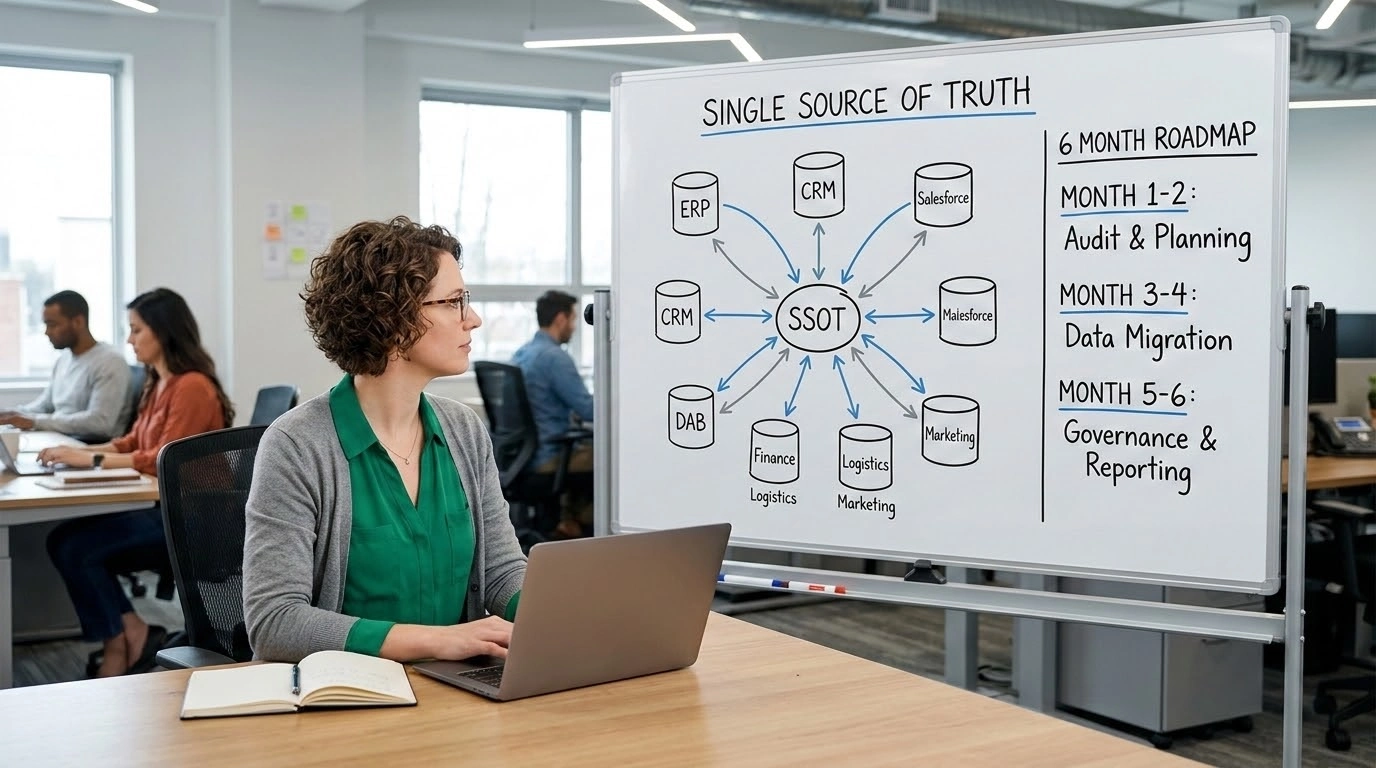
A 6 month plan includes audit, cleanup, integration, and deployment in structured phases.
First phase covers months 1 and 2 for audit and mapping: Document every system, map data flows, and assess quality across all platforms.
Second phase spans months 3 and 4 for data cleanup: Remove duplicates, fix errors, and standardize formats across all sources.
Final phase runs months 5 and 6 for integration and rollout: Connect systems, test data flows, and launch your central hub for the business.
What results can businesses expect after creating a single source of truth?
Businesses get accurate data, faster decisions, and better coordination across teams.
Consistent reporting: Every department pulls from the same numbers. No more arguing over which report is right.
Improved efficiency: Teams spend less time fixing data errors and more time acting on insights. Anaconda research shows 80% of data professionals spend up to half their time cleaning data.
Better decision making: Leaders trust the data and make faster calls because information is complete and current.

Key Takeaways
- 68% of data professionals cite data silos as their top challenge
- Siloed data can cost companies up to 30% of annual revenue
- A 6 month plan covers audit, cleanup, integration, and rollout
- Data integration connects systems for real time information flow
- A single source of truth eliminates duplicate records and conflicting reports