

Automated Quality Inspection With InsightVillee: How It Spots Defects in 2 Seconds
Automated quality inspection uses AI to scan products and catch defects without human effort. InsightVillee applies this technology to find flaws in just 2 seconds per unit. What used to take quality inspectors 20 minutes now happens almost instantly. That means faster production lines, fewer returned goods, and lower costs.
How Does Automated Quality Inspection Spot Defects in 2 Seconds?
InsightVillee spots defects in 2 seconds using AI vision to scan, compare, and detect flaws instantly without manual inspection.
Defect detection in manufacturing means finding anything wrong with a product before it leaves the line. This includes cracks, scratches, wrong sizes, and missing parts.
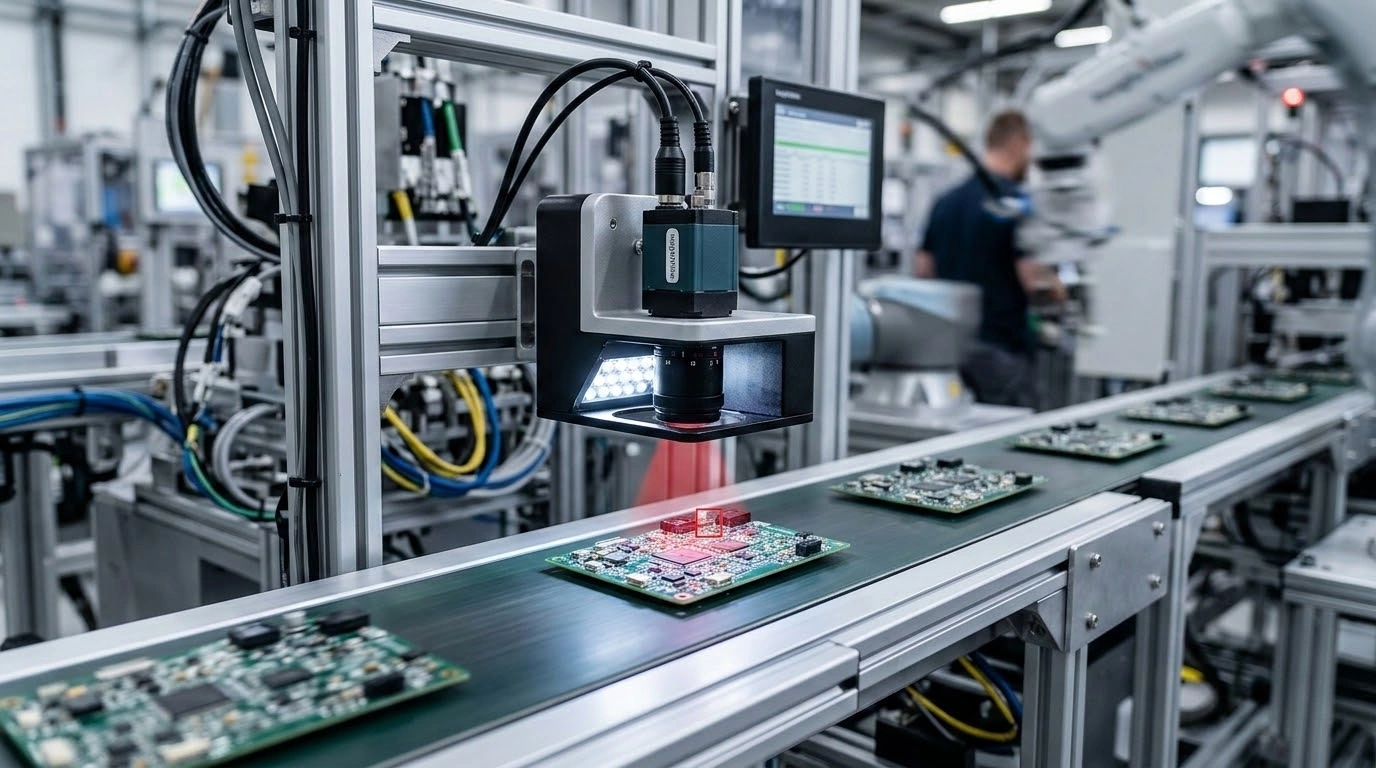
InsightVillee uses cameras and AI to scan every unit in real time. The system captures an image, compares it against a trained standard, and flags anything that does not match. This happens in the time it takes the product to pass the camera.
Speed matters because production lines do not stop. When each unit takes 20 minutes to check manually, only a small fraction gets inspected. Fast checks mean every unit gets reviewed.
What Defect Detection Tasks Can InsightVillee Automate?
InsightVillee automates visual inspection, surface defect detection, measurement checks, and quality validation using AI.
- Surface defects like cracks and scratches – The system spots even hairline cracks and tiny scratches that human eyes miss after long shifts. Every mark is flagged before the unit moves on.
- Shape and size validation – Products are measured against exact dimensions. Anything too big, too small, or slightly off gets caught right away.
- Assembly verification – Missing screws, misaligned parts, or incomplete assemblies are detected in the scan. No more opening products to check inside.
These tasks cover the most common reasons products fail quality checks. AI visual inspection through InsightVillee handles all of them at production speed without slowing down the line.
How Does InsightVillee Cut Inspection Time From 20 Minutes to 2 Seconds?
InsightVillee reduces inspection time by analyzing images instantly, removing manual checks, and processing multiple parameters at once.
Real time image processing Photos are captured and analyzed the moment a unit passes the camera. There is no waiting for a person to pick up the part and examine it. The entire scan finishes in under 2 seconds.
Parallel defect analysis InsightVillee checks for cracks, size errors, and assembly issues all at the same time. A human inspector checks one thing, then the next. The AI does everything simultaneously.
No manual handling delay Units stay on the conveyor belt. Nobody picks them up or turns them around. The camera sees what it needs in a single pass, and the result is logged instantly.
These three factors combine to shrink a 20 minute manual check into a 2 second automated one. An AI inspection system like InsightVillee keeps the line running without bottlenecks.
Why Is Manual Defect Inspection Slow Compared to InsightVillee?
Manual inspection is slow because it depends on human attention, takes longer per unit, and cannot scale for high volume production.
Human fatigue and inconsistency A 2024 study found that inspectors experience measurable accuracy drops after the first two hours of an eight hour shift. Tired eyes miss defects. Attention drifts. Results vary from morning to afternoon.
One unit at a time inspection A person can only look at one product at a time. When a line produces hundreds of units per hour, manual checking creates a massive backlog. That is why factories often inspect only 1 in 8 parts.
Delays in reporting defects When a human finds a defect, they must record it, notify the team, and sometimes stop the line. Each step adds minutes. By the time the problem is communicated, more defective units may have passed through.
Human inspectors miss about 15% of defects on average according to research from TradeAiders. InsightVillee removes that gap with consistent, tireless checking.
How Does InsightVillee Improve Defect Detection Accuracy?
InsightVillee improves accuracy by using trained AI models that detect even minor defects consistently across all units.
Pattern recognition with AI The system learns what a good product looks like from thousands of examples. It then spots anything that deviates from that pattern, even if the difference is tiny.
Consistent inspection standards Every unit gets the same level of attention. The AI does not get tired, distracted, or rushed. Shift changes and overtime do not affect performance.
Detection of micro defects Flaws too small for the human eye are caught by high resolution cameras paired with machine vision quality control. Subtle color shifts, micro cracks, and surface texture changes all get flagged.
AI systems achieve 98 to 99.5% accuracy compared to 80 to 90% for manual inspection according to Opsio. InsightVillee delivers that higher standard on every single unit.
How Does InsightVillee Handle Quality Data and Reporting?
InsightVillee records inspection data automatically, tracks defect trends, and generates real time reports for quality teams.
Centralized defect data Every scan result is stored in one place. Teams can search by date, product type, or defect category. No more digging through paper logs or scattered spreadsheets.
Trend analysis The system tracks which defects happen most often and when they spike. This helps teams find root causes instead of just reacting to symptoms. Patterns become visible that manual tracking never reveals.
Instant reporting dashboards Quality managers see live metrics on their screens without compiling reports by hand. AI quality control through InsightVillee turns raw inspection data into clear charts and alerts automatically.
What Results Can Manufacturers Expect From InsightVillee Defect Detection?
Manufacturers can expect faster inspections, reduced defect rates, and improved production efficiency.
Increase in inspection speed AI processes parts 15 times faster than manual checks according to iFactory. What takes 20 minutes by hand takes 2 seconds with InsightVillee. That speed enables 100% inline inspection instead of sampling.
Reduction in rejected batches Catching defects earlier means fewer bad units make it through. Batches get rejected less often because problems are fixed in real time rather than discovered after the run is complete.
Better production consistency When every unit is checked the same way, output becomes more predictable. Customers
receive uniform quality. Returns drop. Warranty claims shrink.
Computer vision systems reduce manual QA by up to 50% according to SmartDev. InsightVillee brings those savings to your production floor.
Key Takeaways
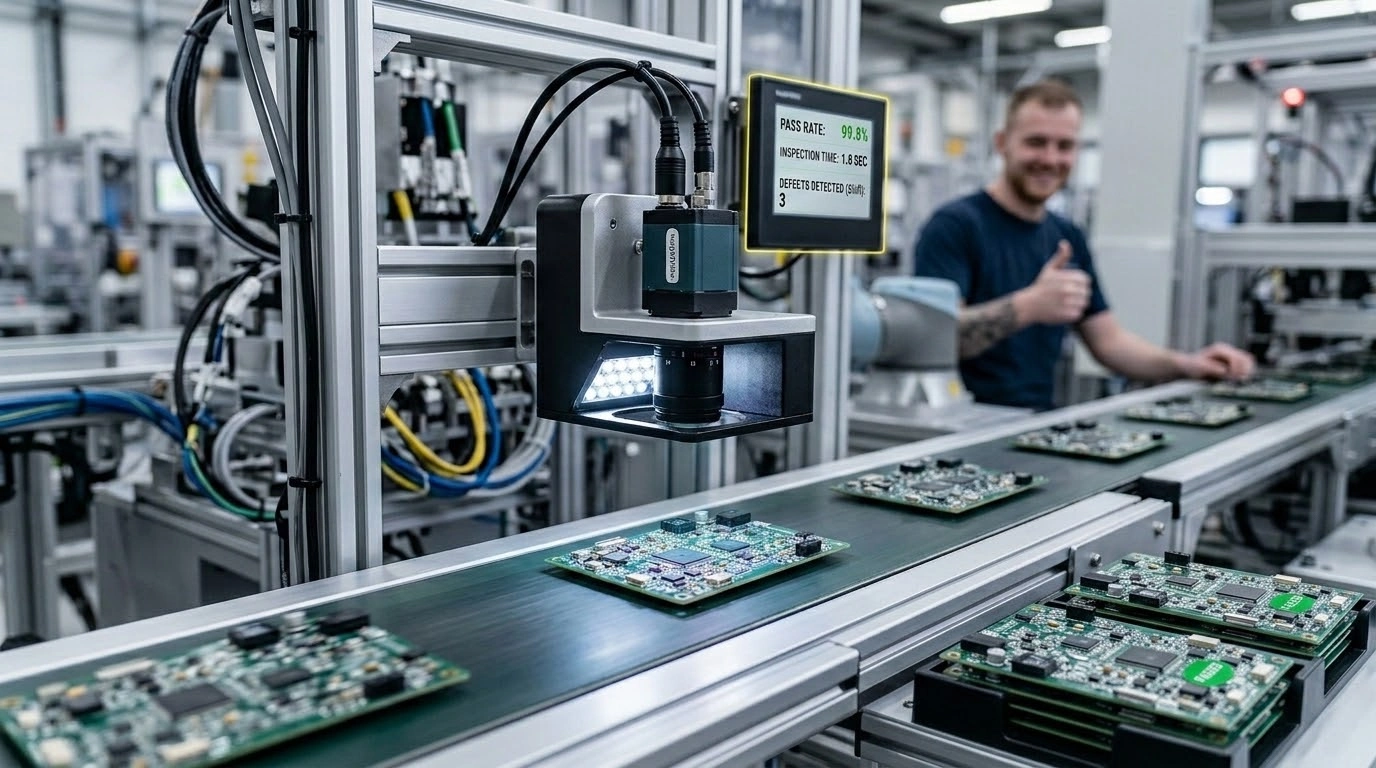
- InsightVillee uses AI vision to scan, compare, and detect defects in 2 seconds per unit.
- Automated tasks include surface defect detection, size validation, and assembly verification.
- Real time image processing, parallel analysis, and no manual handling cut inspection from 20 minutes to 2 seconds.
- Manual inspection suffers from fatigue, one at a time checks, and delayed reporting.
- AI achieves 98 to 99.5% accuracy compared to 80 to 90% for human inspectors.
- InsightVillee centralizes defect data, tracks trends, and generates instant reports.
- Manufacturers gain faster inspections, fewer rejected batches, and more consistent output.