

What Are the Hidden Costs of Running an Outdated ERP System?
Running an outdated ERP system creates hidden expenses through manual work, poor data, slow decisions, security gaps, and lost opportunities. These costs grow silently and damage your bottom line over time.
Businesses often fail to notice these expenses because they do not appear as a single line item on a budget. Instead, they spread across departments as wasted hours, missed sales, and emergency fixes. The hidden costs of outdated ERP accumulate month after month until they become a serious financial burden.
A Deloitte study found that 55% of IT budgets go toward maintaining legacy systems, leaving only 19% for innovation. This imbalance means companies spend most of their technology dollars just keeping old software running instead of driving the business forward.
-
Increased Manual Work and Labor Costs
Outdated ERP systems force employees to do more manual work, which raises labor costs and lowers output across the organization.
- Repetitive data entry eats up staff hours every day
- Teams spend time copying information between systems
- More personnel are needed to handle tasks that modern software automates
- Productivity drops as workers focus on admin instead of strategy
Companies using legacy ERP often rely on spreadsheets and workarounds to fill gaps. This extra handling increases error rates and extends processing times. Research shows that ERP software reduces manual errors by 70%, meaning outdated platforms leave that savings on the table.

-
Poor Data Accuracy and Decision Making
Old systems produce inconsistent or outdated data, which leads to bad business decisions and wasted resources.
- Duplicate records create confusion about customers and inventory
- Delayed updates mean leaders work with stale information
- Reports contain errors that erode trust in the numbers
- Teams second guess data and spend extra time verifying figures
When decision makers cannot rely on their own data, the entire organization slows down. Inaccurate reporting causes overstocking, missed deliveries, and poor financial planning. Upgrading to current ERP software ensures that everyone works from a single source of truth.
-
Lack of Real Time Visibility
Without real time data, businesses cannot respond quickly to changes in demand, supply chain disruptions, or customer needs.
- Delayed insights prevent fast adjustments to market shifts
- Leaders make decisions based on yesterday’s information
- Customer inquiries take longer to answer
- Inventory levels are never accurate in the moment
Real time visibility allows managers to spot problems early and take corrective action before small issues become expensive ones. Companies that run on outdated platforms operate with a constant lag between what is happening and what they can see. That gap widens every quarter as competitors adopt faster tools.
-
High Maintenance and Support Costs
Maintaining outdated systems becomes increasingly expensive as vendors reduce support and skilled staff become harder to find.
- Legacy ERP requires specialized technicians who charge premium rates
- Frequent patches and fixes consume IT resources
- Vendor support shrinks or ends for older software versions
- Custom workarounds add layers of complexity and cost
Organizations spend between 60% and 80% of their IT budgets on maintaining existing systems, according to industry research. The ERP maintenance cost for outdated platforms keeps rising while delivering fewer improvements. Meanwhile, 90.5% of companies that modernized their ERP reported reduced IT maintenance costs in 2024.
-
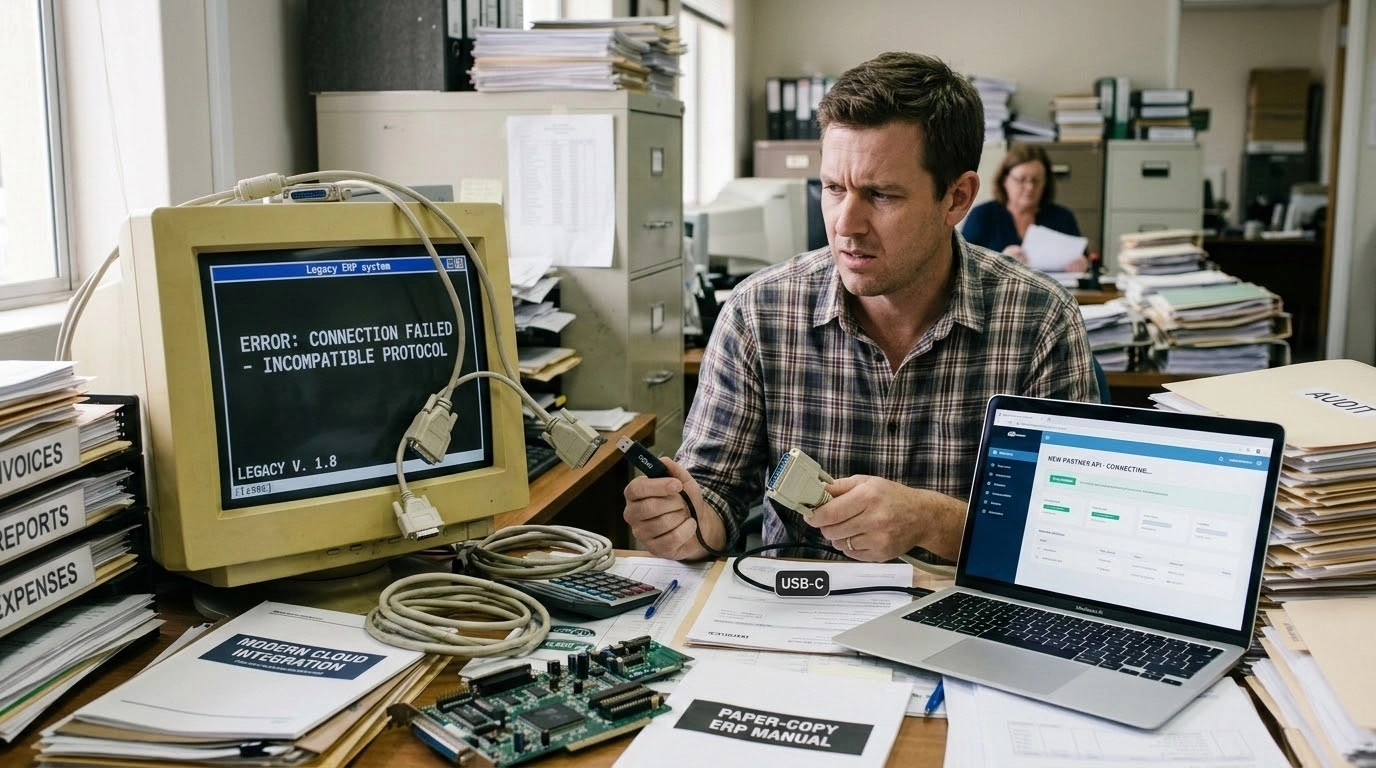
Integration Challenges With Modern Tools
Old ERP systems struggle to connect with new technologies, creating isolated data pockets and inefficient workflows.
- Data silos form when systems cannot share information
- Manual integrations require constant upkeep and break often
- New tools like CRM, online commerce, and analytics platforms cannot sync
- Workarounds create duplicate effort and inconsistent records
Modern businesses depend on a connected stack of tools. A legacy ERP acts as a roadblock that prevents seamless data flow between departments. The hidden costs of outdated ERP grow each time a team builds another manual bridge between disconnected applications.
-
Security Risks and Compliance Issues
Outdated systems carry serious security vulnerabilities and may fail to meet current compliance requirements.
- Unpatched software leaves doors open for cyber attacks
- Weak or missing security features expose sensitive data
- Compliance standards change regularly and old platforms cannot keep up
- A single breach can cost millions in recovery and fines
IBM reported that the global average cost of a data breach reached $4.9 million in 2024. Running a legacy ERP without current security patches significantly increases the chance of becoming part of that statistic. An ERP upgrade brings modern encryption, access controls, and audit trails that protect both data and reputation.
-
Lost Business Growth Opportunities
Limited system capabilities restrict scalability and innovation, causing businesses to miss growth chances that competitors capture.
- Inability to scale operations when demand increases
- Slower market response compared to agile competitors
- Reduced ability to launch new products or enter new markets
- Customer experience suffers when systems cannot keep up
Companies that modernize their ERP software report that 63.4% saw savings in operating and labor costs, and 85.5% experienced improved efficiency. Sticking with outdated technology means leaving these gains on the table while competitors move ahead.
Key Takeaways
- The hidden costs of outdated ERP go far beyond the software license fee
- Manual work, bad data, and slow visibility drain productivity daily
- Maintenance and security expenses keep rising the longer you wait
- Integration gaps and compliance risks add both cost and danger
- An ERP upgrade pays for itself through savings, speed, and growth
- 90.5% of companies that modernized reported lower IT maintenance costs
- Every month of delay increases the total cost of staying on legacy ERP