

How SAP Connects Your Production Team, Warehouse, and Accounting in One Place
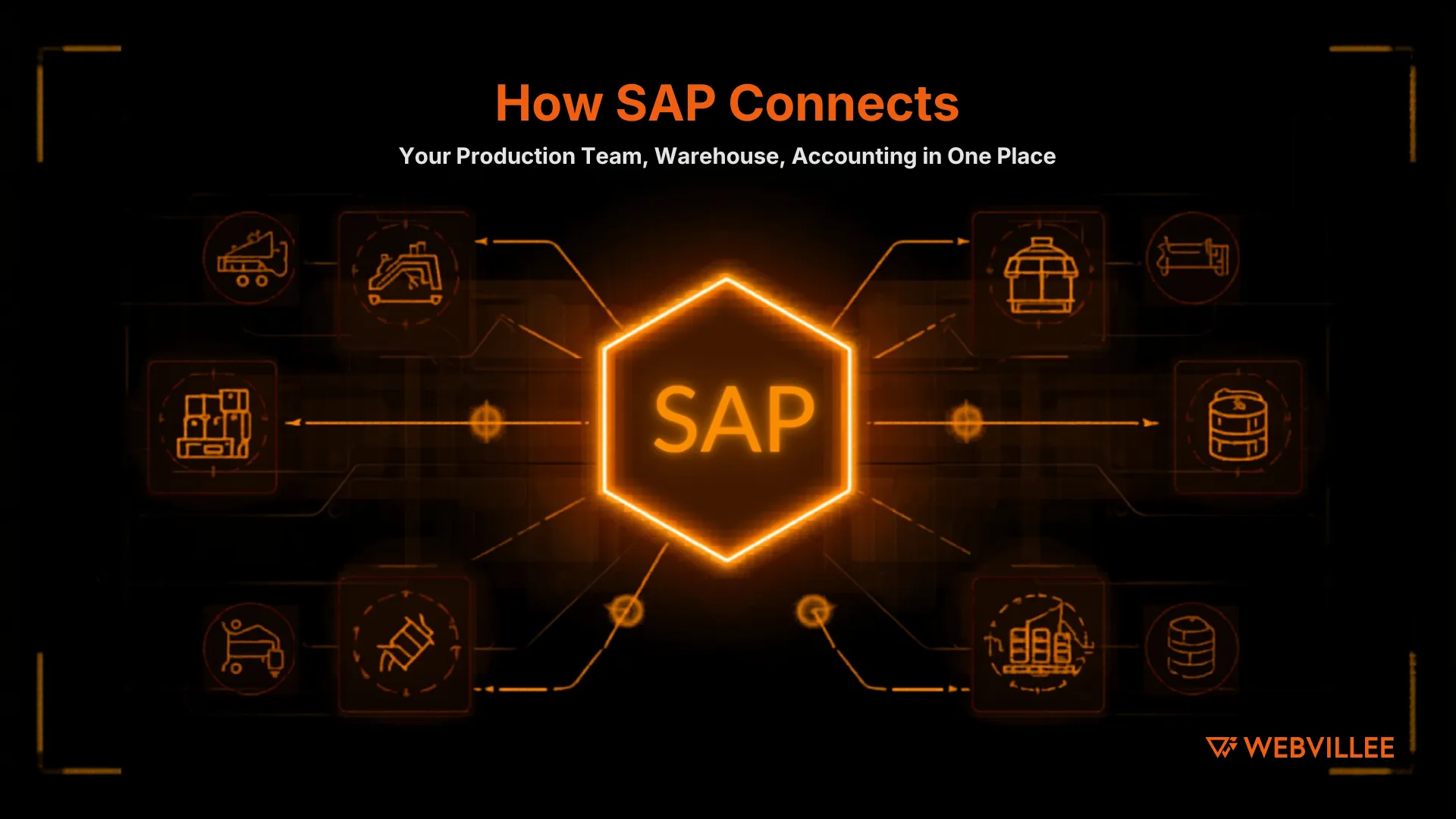
SAP connects production, warehouse, and accounting so data flows between them without manual transfers. That means fewer errors, faster decisions, and no more guessing which spreadsheet is current. This guide shows exactly how each team stays connected and what results to expect.
How Does SAP ERP Software Connect Production, Warehouse, and Accounting?
SAP connects production, warehouse, and accounting by using a single system where all teams access the same data in real time.
“One place” means one database. When production logs a finished batch, the warehouse sees the new stock right away. Accounting sees the cost update at the same moment.
Shared data removes the need for emails, spreadsheets, and phone calls between teams. Everyone works from the same source of truth. Changes reflect instantly across all departments.
Real time updates are the key. Nothing waits for a nightly sync or a manual export. SAP integration keeps every team looking at current information at all times.
How Does SAP Connect Production Team Operations With Other Departments?
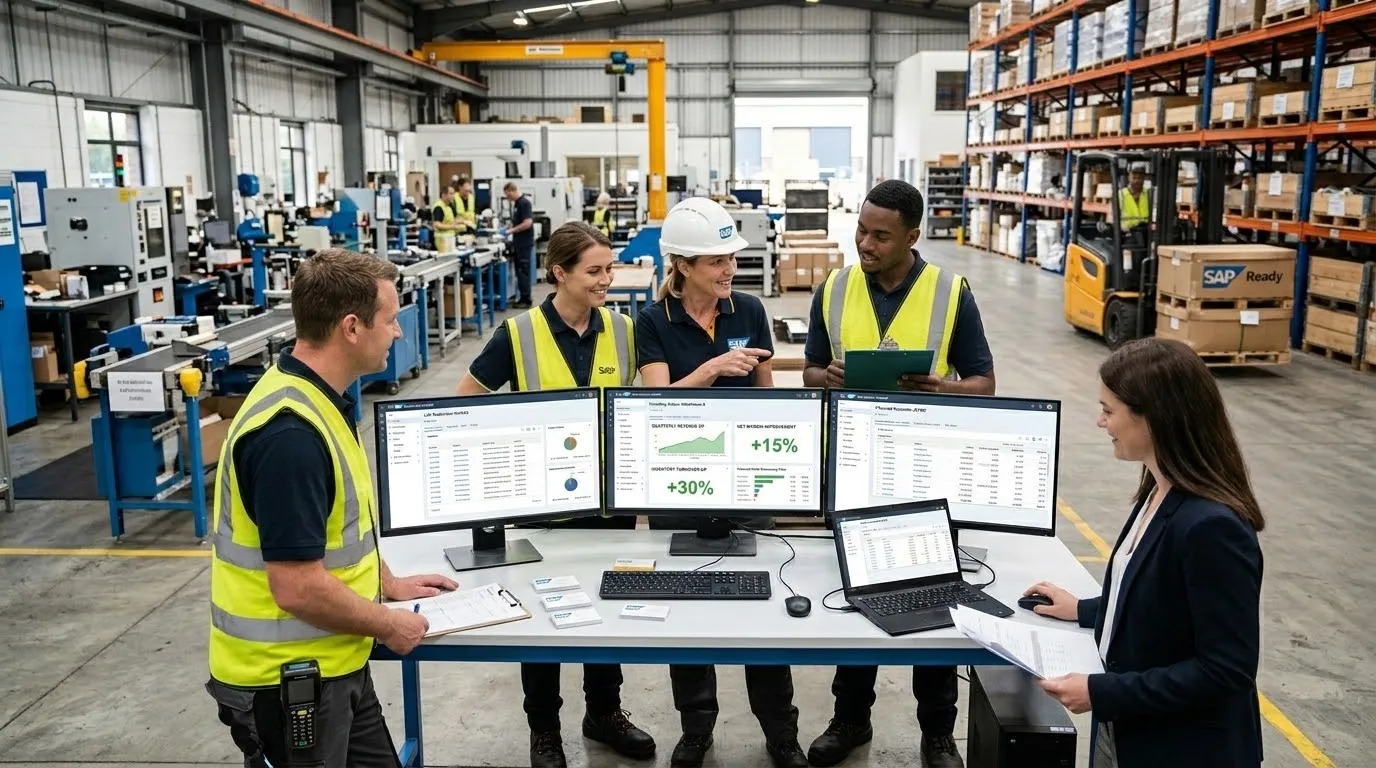
SAP connects production by linking orders, materials, and outputs directly with warehouse and accounting systems.
Production planning data
Production schedules are visible to everyone. The warehouse knows what materials to prepare. Accounting sees what budgets are allocated. No one is caught off guard.
Material usage tracking
When materials move from the warehouse to the production floor, SAP records it automatically. Inventory drops in real time. Costs update in the financial ledger without manual entry.
Output updates
Finished goods are logged the moment production completes. Stock levels rise in the warehouse. Revenue projections adjust in accounting. All three teams see the change together.
How Does SAP Connect Warehouse Management With Production and Accounting?
SAP connects warehouse data by updating inventory levels instantly based on production and linking stock value to accounting.
Real time inventory updates
Every goods receipt, goods issue, and transfer posts immediately. Production knows what is available. Accounting knows what is on hand. No waiting for end of day counts.
Stock movement tracking
SAP S/4HANA records each movement with a timestamp and reference. Teams can trace exactly where a material came from and where it went. This traceability supports audits and problem solving.
Inventory valuation
Stock is valued in real time using the same data the warehouse uses for quantities. Accounting never needs a separate reconciliation. Financial reports reflect actual inventory value at any moment.
How Does SAP Connect Accounting With Production and Warehouse Data?
SAP connects accounting by capturing financial data automatically from production and warehouse transactions.
Cost tracking
Every production run generates cost data automatically. Labor, materials, and overhead are captured without spreadsheets. Finance teams see actual costs versus planned costs in real time.
Revenue and expense updates
When finished goods ship, revenue is recognized. When materials are consumed, expenses post. Nothing sits in a queue waiting for someone to key it into the accounting system.
Financial reporting
Reports pull live data from operations. Profitability analysis reflects current production output. Cash flow forecasts use real warehouse movements. Decisions are based on facts not estimates.
Why Is Disconnected Data a Problem Without SAP?
Without SAP, teams work on separate systems, leading to mismatched data, delays, and poor decision making.
Data mismatch issues
Production counts 500 units finished. The warehouse shows 480 received. Accounting has a third number. Reconciling these differences takes hours and erodes trust in the data.
Delayed reporting
Disconnected systems mean manual exports, email attachments, and copy paste jobs. Reports that should take minutes take days. By the time leadership sees the numbers, they are already outdated.
Lack of visibility
Gartner reports the average company loses $12.9 million annually due to poor data quality. When systems do not talk to each other, leaders make decisions on incomplete information. That risk grows as the business scales.
How Does SAP Improve Accuracy When Connecting Teams?
SAP improves accuracy by using a single data source that updates automatically across all departments.
No duplicate data entry
Each transaction is recorded once. Production enters output data and the warehouse and accounting receive it automatically. There is no second entry step where typos creep in.
Reduced manual errors
When people stop moving data between systems, mistakes drop. SAP implementation removes the copy paste steps that cause most data errors. Teams trust the numbers because no one touched them in between.
Consistent reporting
Every report pulls from the same source. Production reports match warehouse reports. Warehouse reports match financial statements. There is one version of the truth across the business.
What Business Results Come From SAP Connecting Teams?
Businesses get faster operations, better visibility, and improved decision making when all teams are connected in SAP.
Faster workflows
A 2025 report found that 78 percent of organizations saw improved productivity after ERP implementation. Production planning cycles that took weeks now take days. Orders move from floor to shipment without delays.
Real time insights
Dashboards show live data from every department. Leaders spot problems early instead of discovering them in monthly reports. Quick responses prevent small issues from becoming expensive ones.
Better planning
On time delivery performance can jump from 55 percent to 94 percent with connected systems. Inventory turns improve by 35 percent. Planning becomes proactive instead of reactive.
Key Takeaways
- SAP connects production, warehouse, and accounting through one shared database with real time updates.
- Production data flows automatically to warehouse and accounting without manual transfer.
- Warehouse inventory and valuation update instantly based on production activity.
- Accounting captures costs and revenue directly from operational transactions.
- Disconnected systems cost companies millions in lost productivity and poor data quality.
- SAP eliminates duplicate entry, reduces manual errors, and delivers consistent reporting.
- Businesses see faster workflows, real time insights, and better planning with connected teams.