

Why Cloud Solutions Simplify Your Entire IT Journey and Reduce Operational Load
Cloud solutions for IT simplification help growing businesses reduce complexity, lower operational strain, and turn IT into a stable foundation instead of a constant challenge.
Why IT Feels Complicated for Growing Businesses
IT feels complicated when growth happens faster than systems can adapt.
Most businesses start with simple setups designed for small teams. As the organization expands, those early decisions begin to show cracks.
New tools are added quickly to solve immediate problems, but without a clear structure, IT becomes harder to manage with every new addition.
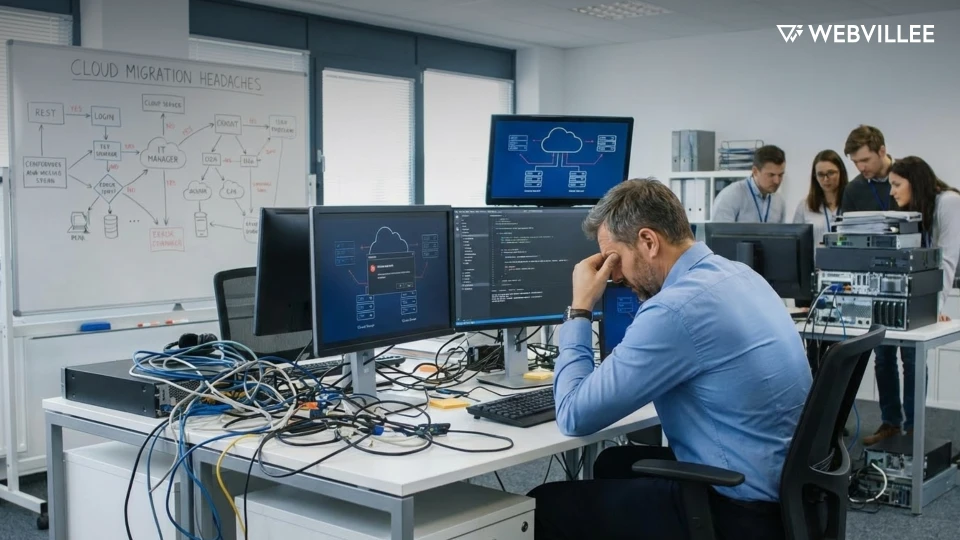
The Real Meaning of an IT Journey in Modern Organizations
An IT journey reflects how technology supports business growth over time.
It is not a single project or upgrade. It includes infrastructure, applications, security, data, and how teams interact with systems daily.
When this journey lacks direction, technology starts slowing the business instead of enabling it.
How Complexity Creeps In as Tools, Teams, and Data Grow
Complexity grows quietly as systems multiply without integration.
Each new department, location, or service adds another layer of tools and data.
- Different teams adopt different platforms
- Data becomes fragmented across systems
- Processes vary from team to team
Over time, IT teams spend more effort maintaining connections than supporting innovation.
The Everyday Problems That Make IT Hard to Manage
Operational friction is the result of disconnected infrastructure.
These challenges show up daily, even if they are not always visible at leadership level.
Too Many Systems Doing Similar Jobs
Redundant tools increase cost and confusion.
Multiple platforms often handle overlapping tasks, creating inconsistent workflows and duplicated effort.
Manual Work That Slows Down Teams
Manual processes increase dependency on IT support.
Teams rely on spreadsheets, emails, and handoffs because systems do not talk to each other.
Limited Visibility Into What Is Actually Working
Lack of visibility makes decision making reactive.
Without centralized monitoring, it is difficult to understand system performance, usage, or risk.
Rising Costs Without Clear Accountability
IT spending increases while value becomes harder to measure.
Hardware investments, licenses, and maintenance costs pile up without clear ownership.
What Cloud Solutions Actually Mean for Your Business
Cloud solutions change how IT is delivered and managed.
They are not only about hosting servers remotely. They redefine how infrastructure, platforms, and services are consumed.
Moving Beyond Physical Servers and Fixed Infrastructure
Cloud removes dependency on physical infrastructure.
Businesses no longer need to plan capacity years in advance or manage hardware lifecycles.
Cloud as a Service Model Explained Simply
Cloud delivers IT resources as on demand services.
- Infrastructure provided when needed
- Platforms managed by cloud providers
- Applications accessed through secure environments
This model aligns IT usage directly with business needs.
Why Cloud Is a Shift in How IT Is Managed, Not Just Where It Lives
Cloud shifts responsibility from maintenance to management.
Internal teams focus on governance, optimization, and strategy instead of upkeep.
How Cloud Simplifies Infrastructure From Day One
Cloud removes foundational complexity immediately.
From the first deployment, infrastructure becomes easier to provision, manage, and scale.
No More Hardware Procurement and Maintenance
Cloud eliminates hardware related delays.
No procurement cycles, no physical setup, and no maintenance schedules.
Instant Access to Computing Power When You Need It
Resources are available on demand.
This flexibility supports experimentation, testing, and rapid deployment.
Centralized Management Across Locations and Teams
Cloud enables unified control across the organization.
IT teams manage systems centrally, even when teams are distributed.
Reducing Operational Load on Internal IT Teams
Cloud reduces daily operational pressure on IT staff.
Routine maintenance tasks are handled by the cloud platform.
Less Time Spent on Routine Maintenance and Updates
Updates happen automatically.
This reduces downtime and manual intervention.
Fewer Firefighting Moments and Emergency Fixes
Stability improves with managed infrastructure.
Proactive monitoring replaces reactive troubleshooting.
Allowing IT Teams to Focus on Strategy, Not Support Tickets
IT shifts from support to enablement.
Teams can focus on innovation, automation, and business alignment.
How Cloud Improves Scalability Without Disruption
Cloud supports growth without reengineering systems.
Scalability becomes an operational choice, not a technical limitation.
Scaling Resources Up or Down Without Rebuilding Systems
Capacity adjusts dynamically.
Resources match demand in real time.
Supporting Business Growth Without IT Bottlenecks
New teams and projects launch faster.
IT no longer blocks expansion.
Handling Seasonal Demand and Sudden Spikes Smoothly
Cloud absorbs demand fluctuations.
This prevents over provisioning and under utilization.
Improving Security and Compliance With Less Effort
Cloud platforms embed security by design.
Security becomes consistent rather than fragmented.
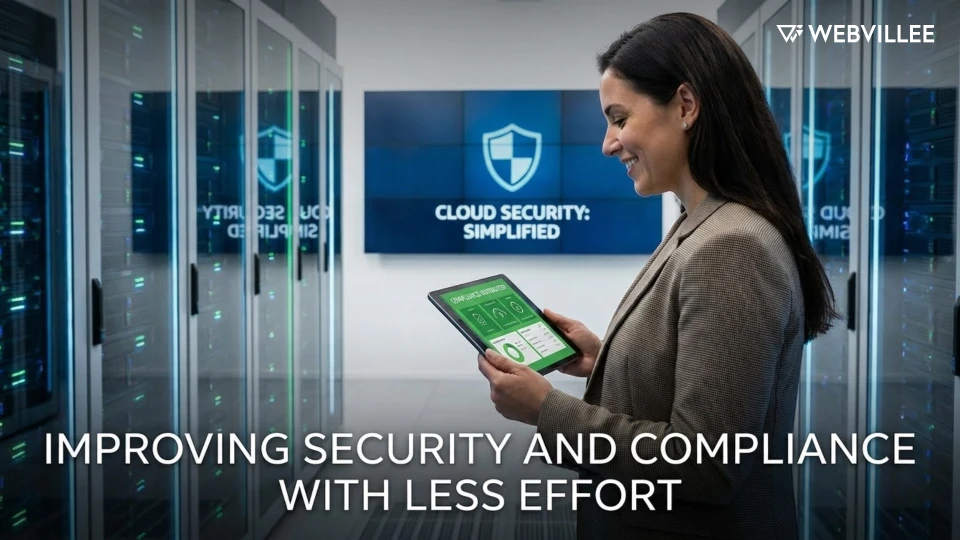
Built In Security Controls and Monitoring
Standardized security reduces human error.
Central dashboards provide continuous visibility.
Regular Updates That Reduce Risk Exposure
Security patches are applied automatically.
This reduces vulnerability windows.
Meeting Compliance Needs Without Manual Oversight
Compliance frameworks are supported by default.
This lowers audit preparation effort.
How Cloud Enables Better Collaboration Across Teams
Cloud connects teams through shared systems.
Collaboration improves when access and data are consistent.
Accessing Systems and Data From Anywhere
Cloud supports flexible work environments.
Location no longer restricts productivity.
Keeping Everyone on the Same Version of the Truth
Data consistency reduces conflict.
Teams rely on shared records.
Supporting Remote and Hybrid Work Models Easily
Cloud adapts to modern work patterns.
This improves employee experience.
Cost Control and Predictable IT Spending With Cloud
Cloud aligns cost with actual usage.
Financial planning becomes more transparent.
Shifting From Capital Expenses to Operational Expenses
Cloud reduces upfront investment.
Costs spread over time.
Paying Only for What You Actually Use
Usage based pricing improves efficiency.
Waste is minimized.
Gaining Clear Visibility Into IT Costs and Usage
Cloud reporting improves accountability.
Spending aligns with outcomes.
Cloud as the Foundation for Future Digital Initiatives
Cloud enables long term digital growth.
It supports platforms like CRM & ERP, Salesforce Services, Microsoft Dynamics 365, and ServiceNow.
Cloud also strengthens Product Engineering, Java Development, and Dot Net Development by providing scalable environments.
Common Misconceptions That Hold Businesses Back
Misunderstandings slow cloud adoption.
- Cloud is only for large enterprises
- Cloud means loss of control
- Cloud migration must be immediate
How to Start Your Cloud Journey the Right Way
Successful adoption begins with clarity.
Businesses should align cloud strategy with broader Digital Transformation goals.
Assessing Current Systems and Workloads
Understanding existing IT is essential.
This identifies quick wins.
Choosing the Right Cloud Model for Your Needs
Public, private, or hybrid choices depend on context.
Strategy matters more than tools.
Planning Migration Without Disrupting Operations
Phased migration reduces risk.
Business continuity remains intact.
Simplifying IT Is About Smart Choices
Cloud reduces complexity by design.
It removes friction, improves visibility, and supports growth.
With the right Cloud Solution strategy and strong Managed IT Services, cloud transforms IT into a reliable business enabler rather than an operational burden.