


Effective system integration architecture is the foundation of digital transformation. Today’s mid-sized enterprises face a unique challenge: integrating multiple systems and platforms. This must be done without breaking the bank or disrupting existing operations. Many organizations manage legacy systems alongside modern cloud solutions. Others connect disparate business applications. Having a solid system integration strategy is crucial for success.
What is system integration architecture, really? It’s not just about making different systems talk to each other. Rather, it’s about creating a cohesive, efficient technology ecosystem. This ecosystem drives business value. In this guide, we’ll explore five proven architecture strategies. These strategies work particularly well for mid-sized enterprises.
1. The API-First Integration Approach
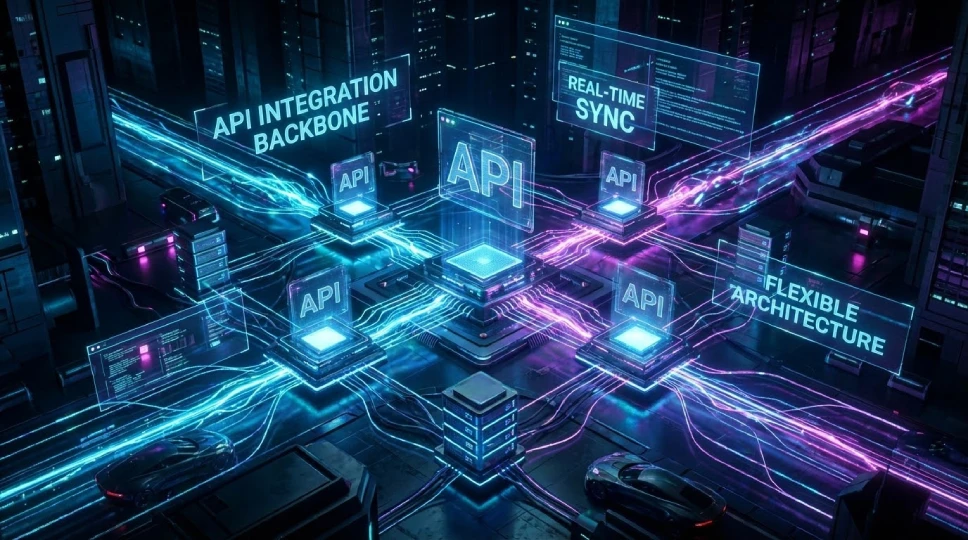
APIs (Application Programming Interfaces) have become the backbone of modern system integration. An API-first approach means designing your integration strategy around APIs from the ground up, rather than treating them as an afterthought.
For mid-sized enterprises, this strategy offers several advantages:
- Flexibility: APIs allow systems to be loosely coupled, making it easier to update or replace individual components without affecting the entire ecosystem.
- Scalability: As your business grows, APIs can handle increased transaction volumes and complexity.
- Real-time Data Sync: APIs enable real-time data synchronization between systems, crucial for decision-making.
Best practices for API-first integration include using REST or GraphQL standards, implementing proper versioning, and securing your APIs with OAuth 2.0 or similar protocols.
2. Enterprise Service Bus (ESB) Architecture
An Enterprise Service Bus (ESB) acts as a central hub that connects all your business applications. Think of it as a sophisticated messenger that handles communication between different systems.
Key benefits of an ESB approach:
- Centralized Message Management: All communication flows through a single, monitored point, making debugging and monitoring easier.
- Protocol Translation: ESB can automatically translate between different data formats and protocols (XML, JSON, etc.).
- Message Routing: Sophisticated routing rules ensure data gets to the right place at the right time.
- Error Handling: ESB provides robust error handling and retry mechanisms.
Popular ESB solutions for mid-market enterprises include MuleSoft, Apache ServiceMix, and TIBCO. The key is to choose an ESB that balances cost, scalability, and ease of use.
3. Microservices Architecture with Integration Patterns
Microservices represent a paradigm shift from monolithic applications to loosely coupled, independently deployable services. Each microservice handles a specific business capability and communicates with others through well-defined APIs.
Why microservices work well for mid-sized enterprises:
- Independent Scaling: Scale specific services based on demand without scaling the entire system.
- Technology Flexibility: Different services can use different technology stacks optimized for their purpose.
- Faster Deployment: Teams can develop and deploy services independently, reducing time-to-market.
- Resilience: Failure in one service doesn’t necessarily cascade to the entire system.
Implementing microservices requires careful planning around service discovery, load balancing, and distributed tracing. Technologies like Docker and Kubernetes help manage containerized microservices at scale.
4. iPaaS (Integration Platform as a Service) Solutions
iPaaS platforms like Zapier, Integromat, and cloud-native solutions offer a modern approach to system integration without heavy infrastructure investment. These platforms provide pre-built connectors and low-code/no-code integration capabilities.
Advantages for mid-sized enterprises:
- Reduced Time to Integration: Pre-built connectors accelerate integration projects significantly.
- Lower Infrastructure Costs: No need to maintain dedicated integration servers or hire specialized ESB administrators.
- Easier Maintenance: Platform providers handle updates and security patches.
- Cloud-Native: Built for cloud-first environments, ensuring scalability and availability.
iPaaS works particularly well when integrating SaaS applications (CRM, ERP, HRM, etc.). However, for complex legacy system integrations, you may still need custom development on top of the iPaaS foundation.
5. Hybrid Integration Approach
The most pragmatic solution for many mid-sized enterprises is a hybrid approach that combines multiple integration patterns based on specific use cases. You might use APIs for new cloud applications, maintain an ESB for legacy system coordination, and leverage iPaaS for third-party SaaS integrations.
Why hybrid integration makes sense:
- Cost Optimization: Use the most cost-effective solution for each integration scenario.
- Best-of-Breed Technology: Select the best tool for each specific use case rather than forcing everything into one platform.
- Gradual Migration: Allows you to migrate from legacy systems to modern architectures at a sustainable pace.
- Risk Mitigation: Reduces dependency on a single technology or vendor.
The key to successful hybrid integration is having strong governance, clear documentation, and a central integration team that understands all the technologies in use.

Choosing the Right Integration Strategy for Your Enterprise
There’s no one-size-fits-all solution to system integration architecture. The best approach depends on several factors:
- Your current technology landscape and legacy system dependencies
- Budget constraints and ROI expectations
- Team expertise and staffing availability
- Timeline and business urgency
- Future growth and scalability requirements
Most successful mid-sized enterprises implement a combination of these strategies, starting with quick wins using iPaaS or APIs for new systems, while gradually modernizing their integration infrastructure. The key is to start with a clear vision, plan for scalability, and maintain flexibility to adapt as your business evolves.
At Webvillee, we specialize in helping mid-sized enterprises design and implement system integration solutions that balance cost, performance, and maintainability. Whether you’re considering a complete infrastructure overhaul or need to integrate a specific application, our team can help you navigate the complexity and make the right architectural decisions for your business.
Ready to transform your system integration strategy? Contact our team to discuss your unique integration challenges and explore the best path forward for your organization.