

Hyperautomation ROI: 5 Manufacturing Processes That Cut Costs 20-35%
Hyperautomation ROI manufacturing refers to measurable cost reductions of 20-35% that manufacturers achieve by combining robotic process automation, artificial intelligence, analytics, and process orchestration across end to end production workflows instead of isolated automation tools.
Why Manufacturing Leaders Are Reassessing Hyperautomation ROI Manufacturing
Hyperautomation ROI manufacturing has become critical as manufacturers face rising cost pressures across labor, energy, and materials while traditional automation delivers diminishing returns that no longer justify investment.
Cost pressures are intensifying across every manufacturing input. Labor costs continue climbing while qualified workers become harder to find. Energy expenses fluctuate unpredictably based on global supply dynamics. Raw material prices remain volatile.
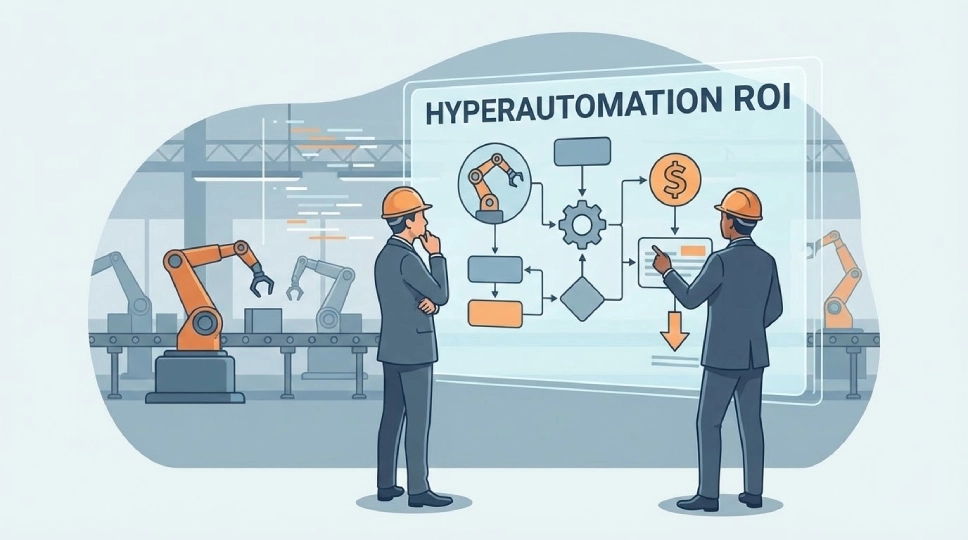
Traditional automation addressed isolated bottlenecks. A robot handled welding. Software managed inventory. These point solutions delivered value initially but eventually hit limits.
Why Traditional Automation Delivers Diminishing Returns
Manufacturers who automated individual tasks discovered the rest of their processes still required manual coordination. Data stayed trapped in separate systems. Decisions moved slowly between automated islands.
The result was automation that improved specific steps without transforming overall efficiency. Organizations reached a plateau where additional investment produced minimal gains.
How Hyperautomation Reframes Cost Reduction Beyond Isolated Tools
Hyperautomation connects automation tools into orchestrated workflows that span entire processes. This integration unlocks value that isolated tools cannot deliver on their own.
Organizations implementing Digital Transformation strategies discover hyperautomation provides the framework to integrate people, systems, and decisions at scale rather than treating automation as disconnected projects.
What Is Hyperautomation in a Manufacturing Context?
Hyperautomation in manufacturing combines robotic process automation, artificial intelligence, analytics, and process orchestration to automate complete workflows from raw material receipt through finished product delivery rather than automating individual tasks.
Think of hyperautomation as the difference between having separate apps on your phone versus having them work together seamlessly. Traditional automation is like using individual apps. Hyperautomation connects them into an integrated experience.
How RPA, AI, Analytics, and Process Orchestration Work Together
Robotic process automation handles repetitive tasks like data entry and system updates. AI makes decisions based on patterns and predictions. Analytics identifies process improvements. Process orchestration coordinates everything.
For example:
- RPA extracts data from supplier invoices automatically
- AI matches invoices to purchase orders and flags discrepancies
- Analytics identifies vendors with frequent errors
- Process orchestration routes approvals and triggers payments
Why Hyperautomation Focuses on End to End Process Optimization
Manufacturing processes span multiple departments and systems. Procurement connects to production planning. Scheduling links to inventory management. Quality control affects maintenance.
Hyperautomation optimizes across these boundaries instead of within departmental silos. This end to end view reveals inefficiencies that single department automation misses entirely.
Why Hyperautomation ROI Is Measurable in Manufacturing
Manufacturing hyperautomation ROI is measurable because high volume repeatable processes create direct links between automation and unit cost reduction with faster payback than service industries.
High volume, repeatable processes as ideal candidates means manufacturers run the same operations thousands or millions of times. Small efficiency gains multiply rapidly into substantial savings.
Direct Links Between Automation and Unit Cost Reduction
Manufacturing allows precise ROI calculation. Organizations can measure cost per unit before and after automation. The difference multiplied by production volume equals measurable savings.
Service businesses face harder ROI measurement because outputs vary and quality remains subjective. Manufacturing produces countable units with defined cost structures that make ROI transparent.
Why Manufacturing Sees Faster Payback Than Other Industries
Research shows manufacturers implementing hyperautomation achieve payback periods of 6 to 9 months compared to 12 to 18 months in service sectors. The difference comes from production volume and process standardization.
A manufacturer producing 10,000 units daily sees automation benefits accumulate rapidly. Organizations achieve average operational cost reductions of 27% through comprehensive process automation.
How to Evaluate Hyperautomation ROI Before Investing
Evaluating hyperautomation ROI before investing requires identifying cost intensive and delay prone processes, establishing baseline metrics, and building realistic ROI models instead of inflated projections.
Start by examining where costs concentrate and delays accumulate. These areas offer the highest automation value because inefficiency creates measurable waste.
Identifying Cost Intensive and Delay Prone Processes
Map your processes to find where expenses cluster:
- Operations requiring extensive manual labor
- Steps with high error rates that trigger rework
- Bottlenecks that slow downstream activities
- Activities consuming premium resources inefficiently
- Workflows dependent on scarce specialized skills
Baseline Metrics That Matter for Manufacturers
Establish current performance metrics before automation. Measure cycle time from order to delivery. Track labor hours per unit produced. Calculate defect rates and rework costs. Document equipment downtime and maintenance expenses.
These baseline numbers become the foundation for ROI comparison. Without accurate before measurements, proving automation value becomes speculation rather than evidence.
Building Realistic ROI Models Instead of Inflated Projections
Realistic models account for implementation time, learning curves, and ongoing costs. Factor in software licensing, system integration, employee training, and change management resources.
Conservative projections assume automation delivers 70% of theoretical maximum efficiency in year one. Organizations often achieve 30% or more operating cost reduction, but reaching full potential takes time.
Manufacturing Process One: Procure to Pay Optimization
Procure to pay optimization cuts costs 20-25% by automating supplier onboarding, invoice matching, and payments to eliminate manual approvals and data entry that create hidden cost drivers.
Manual approvals and data entry create hidden costs that accumulate invisibly. Employees spend hours processing paperwork. Delays from approval bottlenecks strain supplier relationships. Payment errors trigger reconciliation work.
Automating Supplier Onboarding, Invoice Matching, and Payments
Hyperautomation transforms procurement workflows completely. Systems automatically onboard new suppliers by extracting information from registration forms and validating credentials against databases.
Invoice processing accelerates dramatically. Automation reduces processing time by up to 80% through AI powered invoice matching that compares received goods to purchase orders and flags only genuine discrepancies for human review.
Cost Reduction Through Fewer Errors and Faster Cycle Times
Error elimination saves money directly through fewer payment mistakes and invoice corrections. Time savings free procurement teams to negotiate better supplier terms instead of processing paperwork.
Faster payment cycles often unlock early payment discounts. A manufacturer processing 5,000 invoices monthly can save hundreds of thousands annually through error reduction and discount capture.
Manufacturing Process Two: Production Planning and Scheduling
Production planning and scheduling automation delivers 25-30% cost reduction by using AI driven forecasting and automated scheduling to eliminate reactive planning and frequent changeovers that drive downtime, waste, and overtime costs.
Reactive planning creates cascading inefficiencies. Rush orders disrupt optimal production sequences. Frequent changeovers waste setup time. Overtime becomes routine when planning lacks foresight.
Using AI Driven Forecasting and Automated Scheduling
AI analyzes historical patterns, market trends, and external factors to predict demand accurately. Machine learning algorithms optimize production schedules based on equipment capacity, material availability, and delivery commitments.
Automated scheduling balances competing priorities that humans struggle to reconcile simultaneously. The system considers machine maintenance windows, operator skills, quality requirements, and energy costs when sequencing jobs.
Reducing Downtime, Waste, and Overtime Costs
Optimized scheduling minimizes changeovers by grouping similar jobs. This reduces setup waste and keeps production flowing smoothly. Better planning cuts unplanned downtime by ensuring materials arrive exactly when needed.
Overtime expenses drop when workload distribution matches capacity instead of creating emergency situations. Organizations report reducing overtime costs by 15-20% through intelligent scheduling alone.
Manufacturing Process Three: Quality Inspection and Compliance
Quality inspection automation achieves 30-35% cost reduction by combining computer vision with workflow automation to overcome manual inspection limitations and inconsistency while lowering rework, scrap rates, and compliance penalties.
Manual inspection faces inherent limitations. Human attention varies with fatigue. Subtle defects escape detection. Inspection speed creates production bottlenecks.
Combining Computer Vision With Workflow Automation
Computer vision systems capture images of every product. AI models analyze them instantly to detect defects far smaller than human eyes can consistently catch. Research shows AI solutions increase defect detection rates by up to 90% compared to manual inspection.
When defects are detected, automated workflows quarantine products, create quality incident tickets, and trigger corrective actions without human intervention. Some manufacturers report double digit percentage reductions in defect rates after implementing AI vision systems.
Lowering Rework, Scrap Rates, and Compliance Penalties
Early defect detection prevents defective components from advancing through production where they waste additional labor and materials. Catching issues at first inspection reduces scrap costs dramatically.
Compliance becomes automatic when systems log every inspection with timestamps and images. Regulatory audits that previously consumed weeks now complete in days because documentation exists by default.
Manufacturing Process Four: Inventory and Warehouse Management
Inventory and warehouse management automation cuts costs 20-28% by automating demand signals, replenishment, and picking workflows to balance overstocking versus stockouts while cutting carrying costs and improving service levels.
Overstocking ties up capital in excess inventory while consuming warehouse space. Stockouts halt production and damage customer relationships. Finding the right balance manually proves nearly impossible.
Automating Demand Signals, Replenishment, and Picking Workflows
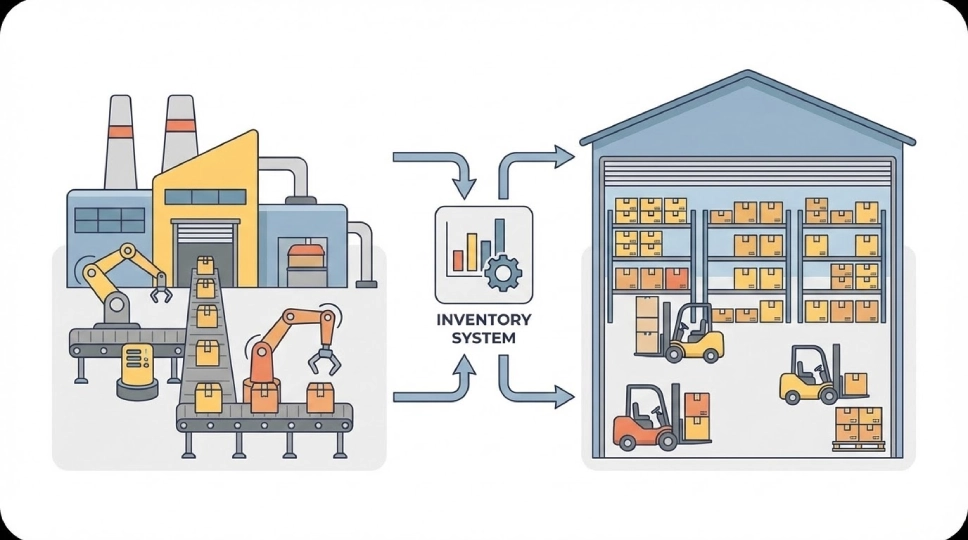
AI powered systems monitor inventory levels in real time. When stock falls below thresholds, automation triggers replenishment orders automatically. Demand forecasting becomes more accurate by analyzing sales patterns, seasonal trends, and market signals.
Warehouse picking workflows optimize routes through automated coordination. Workers receive instructions on mobile devices showing the most efficient path to collect items for multiple orders simultaneously.
Cutting Carrying Costs While Improving Service Levels
Precise inventory management reduces carrying costs by maintaining minimum viable stock levels. Capital previously locked in excess inventory becomes available for productive investments.
Paradoxically, service levels improve despite lower inventory because automation prevents stockouts through better forecasting. Manufacturers report reducing inventory carrying costs by 15-20% while simultaneously improving on time delivery rates.
Manufacturing Process Five: Maintenance and Asset Management
Maintenance and asset management automation achieves 25-30% cost reduction through predictive maintenance powered by data and automation that eliminates reactive maintenance and unplanned downtime while extending asset life and reducing emergency repairs.
Reactive maintenance waits for equipment to fail before taking action. This approach maximizes downtime costs and risks production disruptions. Emergency repairs cost significantly more than planned maintenance.
Predictive Maintenance Powered by Data and Automation
IoT sensors continuously monitor equipment health by tracking vibration, temperature, pressure, and performance metrics. Machine learning algorithms analyze this data to predict potential failures before they occur.
Automation schedules maintenance during planned downtime windows instead of allowing equipment to fail during production runs. Research shows predictive maintenance increases machine uptime by 10 to 20%.
Extending Asset Life While Reducing Emergency Repairs
Proactive maintenance performed at optimal intervals extends equipment lifespan. Machines receive attention before small issues escalate into major failures that require expensive component replacements.
Emergency repair costs plummet when failures become rare events instead of routine occurrences. Maintenance teams transition from firefighting to planned optimization work that prevents problems rather than fixing them.
Where the 20 to 35% Cost Reduction Actually Comes From
The 20 to 35% cost reduction from manufacturing hyperautomation comes from labor efficiency gains without workforce disruption, error elimination and process standardization, plus faster decision cycles and reduced operational friction.
Labor efficiency gains happen when automation handles repetitive work while employees focus on problem solving and improvement activities. Organizations redeploy workers rather than eliminate positions.
Error Elimination and Process Standardization
Automated processes execute consistently every time. This standardization eliminates the variation that creates defects, rework, and waste in manual operations.
Studies show organizations achieve up to 60% decrease in operational costs by automating labor intensive processes that previously suffered from human error and inconsistency.
Faster Decision Cycles and Reduced Operational Friction
Automated data collection and analysis enable real time decision making. Managers respond to issues within minutes instead of waiting for weekly reports.
Operational friction disappears when systems communicate seamlessly. Information flows automatically between departments instead of requiring manual handoffs that create delays and errors.
Common Mistakes That Undermine Hyperautomation ROI
Organizations undermine hyperautomation ROI by automating broken processes without redesign, treating hyperautomation as a one time project, and ignoring change management on the factory floor.
Automating broken processes makes inefficiency permanent. If the underlying workflow is flawed, automation simply executes bad processes faster without improving outcomes.
Treating Hyperautomation as a One Time Project
Hyperautomation requires continuous optimization. Technologies evolve. Processes change. Organizations that implement automation then move on miss ongoing improvement opportunities.
Successful manufacturers establish centers of excellence that continuously identify new automation candidates and refine existing implementations based on performance data.
Ignoring Change Management on the Factory Floor
Technology succeeds or fails based on workforce adoption. Employees resist changes they do not understand or that threaten their roles without clear communication about how automation improves their work environment.
Effective change management involves workers in automation planning, provides training, and demonstrates how technology eliminates frustrating tasks while creating opportunities for more meaningful work.
How to Scale Hyperautomation Across Multiple Plants
Scaling hyperautomation across multiple plants succeeds by starting with high impact pilot processes, creating reusable automation components, and balancing central governance with local flexibility.
Starting with high impact pilot processes builds credibility and generates quick wins that fund broader rollout. Choose processes with clear ROI potential and manageable complexity for initial implementations.
Creating Reusable Automation Components
Build automation solutions as modular components that work across different plant locations. Standardized workflows for common processes like procurement or quality control deploy faster than custom solutions.
Reusable components reduce implementation costs dramatically. The second plant deployment costs a fraction of the first because core automation already exists.
Balancing Central Governance With Local Flexibility
Central governance ensures consistency and prevents redundant efforts. Establish standards for technology platforms, data formats, and process frameworks that all locations follow.
Local flexibility allows plants to adapt automation to their specific constraints and opportunities. Regional managers understand their operations better than corporate teams and should retain decision authority within governance guidelines.
Measuring and Sustaining Hyperautomation ROI Over Time
Sustaining hyperautomation ROI over time requires tracking performance beyond initial savings through continuous optimization and aligning hyperautomation outcomes with business strategy using data driven insights.
Tracking performance beyond initial savings means measuring ongoing benefits and identifying degradation before it impacts results. Monitor automation uptime, error rates, cycle times, and cost per unit continuously.
Continuous Optimization Through Data Driven Insights
Use analytics to identify where automation performs below expectations. Data reveals which processes need refinement and where additional automation would deliver value.
Organizations that treat automation as dynamic systems requiring ongoing tuning achieve better long term results than those viewing implementation as a finish line.
Aligning Hyperautomation Outcomes With Business Strategy
Hyperautomation should support strategic objectives beyond cost reduction. Use automation to improve quality, accelerate time to market, enhance customer responsiveness, or enable product customization.
Strategic alignment ensures automation investments remain relevant as business priorities evolve rather than becoming legacy systems that constrain future options.
Why Hyperautomation Is Becoming a Core Manufacturing Capability
Hyperautomation is becoming a core manufacturing capability because it transforms from cost reduction tool to competitive advantage while supporting resilience in volatile supply chains and preparing operations for long term efficiency and growth.
The shift from cost tool to competitive advantage happens when automation enables capabilities competitors cannot match. Organizations use hyperautomation to deliver customization at scale, respond to demand changes instantly, and maintain quality consistency that builds brand reputation.
Supporting Resilience in Volatile Supply Chains
Supply chain disruptions have become normal rather than exceptional. Hyperautomation provides the flexibility to adjust production quickly, find alternative suppliers automatically, and reroute logistics in response to disruptions.
Resilient manufacturers recover from disruptions faster because their automated systems adapt to changing conditions without requiring extensive manual intervention.
Preparing Manufacturing Operations for Long Term Efficiency and Growth
Future competitive advantage belongs to manufacturers who can scale efficiently. Hyperautomation creates the foundation for growth without proportional cost increases.
Organizations implementing comprehensive automation position themselves to capture market share when demand increases because they can ramp production rapidly while maintaining quality and cost discipline that competitors struggle to match.
Key Takeaways for Manufacturing Hyperautomation ROI
Hyperautomation ROI manufacturing delivers measurable 20-35% cost reductions by orchestrating RPA, AI, analytics, and process automation across complete workflows rather than isolated tasks.
Manufacturing environments provide ideal conditions for hyperautomation ROI measurement through high volume repeatable processes that create direct links between automation and unit cost reduction.
Five high impact manufacturing processes deliver the greatest returns: procure to pay, production planning and scheduling, quality inspection, inventory management, and predictive maintenance.
Cost reductions come from labor efficiency gains, error elimination, process standardization, faster decision cycles, and reduced operational friction rather than workforce elimination.
Successful scaling requires starting with high impact pilots, building reusable components, balancing governance with flexibility, and sustaining ROI through continuous optimization aligned with business strategy.
Contact Webvillee to explore how hyperautomation frameworks can help your manufacturing operations achieve measurable cost reductions while building capabilities for long term competitive advantage and operational resilience.