

Get Your Free FinOps Audit: What Webvillee Reviews in Cloud Cost Optimization Assessments
A free FinOps audit from Webvillee creates visibility across cloud usage and spending patterns, identifies structural issues driving inefficiency, then builds roadmaps for sustainable cost control that transforms cloud spending from unpredictable expense into manageable investment.
Why Cloud Cost Optimization Starts With Visibility Through a FinOps Audit
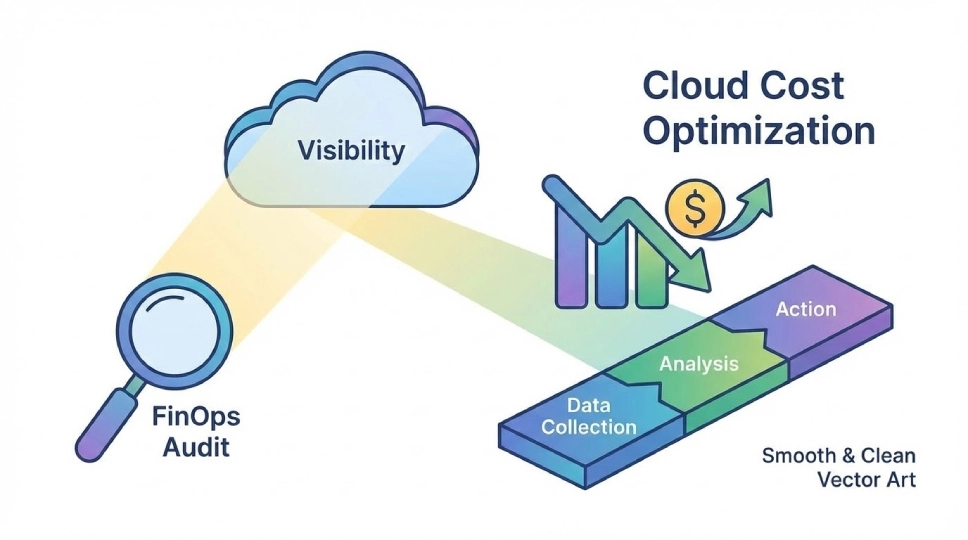
Cloud cost optimization starts with visibility through a FinOps audit because rising cloud bills in growing enterprises reveal optimization efforts that stall without clear baselines showing where money goes and why spending occurs.
Research shows that 84% of enterprises say managing cloud spend is their top cloud challenge, with budgets expected to rise 28% in the coming year.
Why Optimization Efforts Stall Without a Clear Baseline
Organizations implement cost saving measures without understanding root causes. Teams rightsize instances, remove idle resources, then watch spending climb again because structural issues remain unaddressed.
A 2025 Flexera study reveals that 32% of cloud spend is wasted, down only slightly from 35% in 2023. This minimal improvement signals that cloud cost management remains deeply challenging without proper foundations.
How a FinOps Audit Reframes Cloud Spend as a Controllable Variable
FinOps audits transform cloud costs from mysterious monthly surprises into understandable patterns with clear drivers. This visibility enables control through informed decisions rather than reactive cost cutting.
Deloitte predicts that $21 billion may be saved by companies implementing FinOps tools and practices in 2025 alone, with some organizations cutting cloud costs as much as 40%.
What a FinOps Audit Really Is (And What It Is Not)
A FinOps audit moves beyond cost cutting and one time savings exercises to assess financial operations maturity by focusing on behavior, process, and governance that sustain long term cost efficiency.
FinOps audits are not about finding quick wins to reduce this month’s bill. They examine how organizations make decisions, allocate accountability, and operate cloud infrastructure sustainably.
The Difference Between Optimization and Financial Operations Maturity
Optimization finds inefficiencies and fixes them. Financial operations maturity builds systems where inefficiencies do not develop in the first place.
Key differences include:
- Optimization reduces specific costs temporarily
- Maturity prevents cost waste systematically
- Optimization is a project with an end date
- Maturity is an ongoing operating capability
- Optimization focuses on technology changes
- Maturity changes how teams work together
Why Audits Focus on Behavior, Process, and Governance
Technology alone does not control costs. Teams spin up resources without considering expense. Approval workflows lack budget guardrails. Nobody owns cost accountability clearly.
Research shows over 80% of enterprises consider cloud expense management a major challenge, largely due to behavioral and process issues rather than technology limitations.
Why Enterprises Struggle to Control Cloud Costs at Scale
Enterprises struggle to control cloud costs at scale because decentralized usage operates with centralized budgets, accountability remains unclear across engineering and finance teams, and responses to monthly invoices stay reactive.
Decentralized usage means hundreds of engineers across multiple teams provision resources independently. Each decision seems small, but collectively they create unpredictable spending.
Limited Accountability Across Engineering and Finance Teams
Engineering teams optimize for performance and deployment speed. Finance teams track budgets and forecasts. Neither owns cloud cost outcomes completely.
This accountability gap creates situations where nobody has a complete view of cloud spend, causing costs to spiral without clear ownership for control.
Reactive Responses to Monthly Cloud Invoices
Organizations review cloud bills after spending occurs. Teams scramble to explain unexpected charges, identify waste, then implement fixes that address symptoms instead of causes.
This reactive cycle repeats monthly because root structural issues driving cost inefficiency remain unexamined and unresolved.
What Webvillee’s Free FinOps Audit Is Designed to Achieve
Webvillee’s free FinOps audit creates clarity across cloud usage and spending patterns, identifies structural issues driving cost inefficiency, then builds roadmaps for sustainable cost control through systematic assessment.
Creating clarity means understanding exactly where money goes, which teams drive spending, what business activities generate costs, and whether expenses align with value delivery.
Identifying Structural Issues Driving Cost Inefficiency
Structural issues include:
- Missing cost allocation and tagging strategies
- Unclear ownership for cloud spending decisions
- Workflows that provision resources without budget checks
- Architecture patterns that create recurring waste
- Gaps between forecasts and actual consumption
Building a Roadmap for Sustainable Cost Control
Roadmaps prioritize improvements based on impact and implementation effort. Organizations tackle high value quick wins first, then build capabilities that prevent future waste systematically.
Sustainable control means teams manage costs proactively as normal operations instead of fighting fires when invoices arrive.
Cloud Spend Visibility and Allocation Review
Spend visibility review examines how costs are tracked across teams, products, and environments, identifies unallocated and shared cloud expenses, then assesses tagging and cost attribution practices.
Tracking costs requires linking cloud charges to business units, projects, applications, and environments. This attribution enables accountability and informed decision making.
Identifying Unallocated and Shared Cloud Expenses
Unallocated expenses represent charges that cannot be assigned to specific owners. Shared expenses support multiple teams or applications simultaneously.
Organizations discover that 20% to 40% of cloud spending often falls into these categories, creating visibility gaps that prevent effective cost management.
Assessing Tagging and Cost Attribution Practices
Tagging assigns metadata to cloud resources identifying owners, projects, environments, and cost centers. Effective tagging enables accurate allocation.
Audits reveal whether tagging strategies exist, how consistently teams apply tags, and what enforcement mechanisms ensure compliance with tagging policies.
Usage Efficiency and Resource Optimization Assessment
Usage efficiency assessment detects idle, underutilized, and over provisioned resources, evaluates workload sizing and scaling strategies, then identifies quick wins versus long term optimization opportunities.
Idle resources consume costs without delivering value. Underutilized resources run at small fractions of available capacity. Over provisioned resources use more expensive configurations than workloads require.
Evaluating Workload Sizing and Scaling Strategies
Workload sizing determines instance types, memory allocation, and compute capacity. Scaling strategies define how resources adjust to demand changes.
Research shows that rightsizing instances can cut compute costs by 30% to 50% without affecting performance when teams match resources to actual consumption patterns.
Identifying Quick Wins Versus Long Term Optimization Opportunities
Quick wins include removing stopped instances, deleting old snapshots, and downsizing obviously oversized resources. These deliver immediate savings with minimal effort.
Long term opportunities require architectural changes, new automation, or process improvements that prevent waste from recurring.
Architecture and Consumption Pattern Analysis
Architecture analysis reviews design choices that drive recurring costs, understands usage spikes and seasonal demand patterns, then assesses alignment between architecture and business needs.
Design choices about data storage, network configuration, compute allocation, and service selection create cost structures that persist across time.
Understanding Usage Spikes and Seasonal Demand Patterns
Usage patterns reveal when consumption increases, what drives spikes, and whether resources scale down during low demand periods appropriately.
Organizations often discover resources provisioned for peak loads that run continuously instead of scaling dynamically with actual demand.
Assessing Alignment Between Architecture and Business Needs
Some workloads use premium services where standard options suffice. Others run production configurations in development environments. Misalignment creates unnecessary expense.
Audits identify where architecture exceeds requirements and where under provisioning risks business outcomes.
Governance and FinOps Operating Model Review
Governance review examines who owns cloud cost decisions today, how financial accountability is shared across teams, then evaluates approval workflows and guardrails that control spending.
Ownership determines who makes decisions about resource provisioning, architecture choices, and commitment purchases that drive cloud expenses.
How Financial Accountability Is Shared Across Teams
Shared accountability models include:
- Chargeback where departments pay directly for usage
- Showback where teams see cost burden without paying
- Centralized where finance owns all cloud spending
- Distributed where engineering teams own their budgets
Evaluating Approval Workflows and Guardrails
Workflows define who approves resource provisioning, commitment purchases, and architecture changes. Guardrails set policies that prevent expensive mistakes automatically.
Effective governance balances control with agility, preventing waste without blocking innovation or slowing deployment velocity.
Forecasting, Budgeting, and Cost Predictability Check
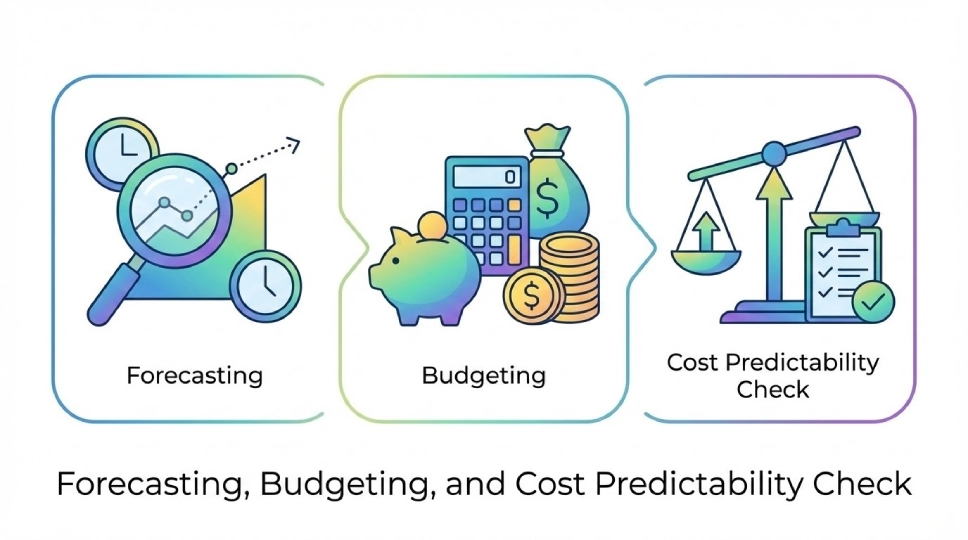
Forecasting review examines how forecasts are built and used in decision making, identifies gaps between expected and actual spend, then highlights opportunities to move from reactive budgeting to proactive planning.
Forecasts predict future cloud spending based on planned initiatives, growth projections, and historical consumption patterns.
Gaps Between Expected and Actual Spend
Organizations set budgets then watch actual costs diverge significantly. These variances signal planning problems, unexpected usage growth, or architectural inefficiencies.
Audits measure forecast accuracy, identify drivers of variance, and assess whether teams use forecasting data to inform decisions or simply track overruns.
Opportunities to Move From Reactive Budgeting to Proactive Planning
Reactive budgeting responds to spending after it occurs. Proactive planning shapes spending before it happens through informed architecture choices and capacity decisions.
The FinOps market is valued at $5.5 billion in 2025, growing at 34.8% annually as organizations recognize that proactive financial operations deliver competitive advantages.
Tooling and Reporting Effectiveness Review
Tooling review assesses current cloud cost and FinOps tools, identifies gaps in reporting clarity and usability, then explains why tools fail without the right operating model.
Organizations implement cost management platforms, monitoring dashboards, and optimization tools expecting immediate results.
Identifying Gaps in Reporting Clarity and Usability
Reports that overwhelm users with data instead of delivering actionable insights create decision paralysis. Teams ignore complex dashboards that require extensive interpretation.
Effective reporting presents information stakeholders need at the detail level appropriate for their roles and responsibilities.
Why Tools Fail Without the Right Operating Model
Tools provide visibility and automation capabilities. Operating models define how teams use those capabilities to make decisions and drive improvements.
The best cost management platforms deliver minimal value when organizations lack processes for acting on insights and accountabilities for implementing recommendations.
Benchmarking Against FinOps Best Practices
Benchmarking compares maturity across visibility, optimization, and operations, identifies where the organization stands today, then highlights priority areas for improvement against industry standards.
FinOps maturity frameworks define capabilities organizations develop as they advance from reactive cost cutting to proactive financial operations.
Identifying Where the Organization Stands Today
Maturity assessment examines:
- Visibility into usage and spending patterns
- Optimization of resource efficiency and commitments
- Operations including governance and accountability
- Culture around cost awareness and shared responsibility
- Tools and automation supporting FinOps practices
Highlighting Priority Areas for Improvement
Organizations typically excel in some areas while lagging in others. Prioritization focuses effort where improvements deliver greatest business impact.
According to the State of FinOps 2025, 50% of practitioners indicate workload optimization and waste reduction as top priorities for their organizations.
What You Receive After the FinOps Audit
After the FinOps audit you receive a clear snapshot of cloud cost health, prioritized recommendations based on impact and effort, plus a practical roadmap to reduce waste and improve predictability.
The snapshot documents current state across visibility, allocation, optimization, governance, and operational maturity dimensions.
Prioritized Recommendations Based on Impact and Effort
Recommendations address:
- Quick wins delivering immediate savings with minimal work
- Process improvements preventing future waste systematically
- Governance enhancements clarifying accountability
- Tool and automation opportunities increasing efficiency
- Architecture optimizations reducing structural costs
A Practical Roadmap to Reduce Waste and Improve Predictability
Roadmaps sequence improvements logically, building capabilities progressively. Organizations implement quick wins while establishing foundations for sustainable cost management.
Practical roadmaps balance business urgency with implementation capacity, creating momentum through visible progress.
Who Should Request a FinOps Audit
Organizations experiencing rapid cloud growth, teams struggling to explain or forecast cloud spend, and leaders seeking cost control without slowing innovation should request FinOps audits.
Rapid cloud growth creates spending that outpaces visibility. Teams provision resources faster than finance can track and analyze consumption.
Teams Struggling to Explain or Forecast Cloud Spend
When finance asks why cloud bills increased, engineering teams cannot provide clear answers. When planning initiatives, nobody confidently predicts cloud cost impacts.
These struggles signal that fundamental visibility and operating model gaps prevent effective cloud financial management.
Leaders Seeking Cost Control Without Slowing Innovation
Traditional cost cutting approaches restrict engineering teams, slow deployment velocity, and limit experimentation that drives competitive advantage.
Cloud Solution strategies balance cost efficiency with business agility through intelligent governance rather than blanket restrictions.
How to Prepare for a FinOps Audit
Preparation involves gathering data and access typically required, involving stakeholders who should participate, then setting expectations for outcomes and next steps in the audit process.
Data requirements include cloud billing exports, resource inventories, organization structures, and existing cost allocation schemes.
Stakeholders Who Should Be Involved
Effective audits require participation from:
- Finance teams who own budgets and forecasts
- Engineering leaders who make architecture decisions
- DevOps teams who provision and manage resources
- Product managers who define requirements
- Executives who set cost control expectations
Setting Expectations for Outcomes and Next Steps
Audits deliver visibility, recommendations, and roadmaps. They do not reduce costs directly but enable informed decisions that organizations implement to achieve savings.
Typical timelines involve two weeks for data gathering and analysis, then collaborative sessions to review findings and refine recommendations.
Why a FinOps Audit Is the First Step Toward Sustainable Cloud Economics
FinOps audits represent the first step toward sustainable cloud economics by moving from guesswork to informed decisions, creating alignment between finance engineering and leadership, then turning cost optimization into ongoing capability.
Guesswork leads to reactive cost cutting that addresses symptoms. Informed decisions based on visibility address root causes systematically.
Creating Alignment Between Finance, Engineering, and Leadership
Finance needs predictability and budget control. Engineering needs deployment velocity and innovation freedom. Leadership needs both efficiency and competitiveness.
Alignment happens when all stakeholders understand cloud economics clearly, share accountability for outcomes, and collaborate on balancing competing priorities.
Turning Cloud Cost Optimization Into an Ongoing Capability
One time optimization projects deliver temporary savings. Ongoing capabilities prevent waste continuously while enabling growth.
Organizations that build FinOps capabilities report sustained cost efficiency even as cloud usage scales, transforming financial operations into strategic competitive advantages.
Key Takeaways for FinOps Audit Success
A free FinOps audit creates visibility across cloud spending patterns that most organizations lack, with 84% of enterprises citing cloud cost management as their top challenge.
Research shows 32% of cloud spend is wasted, representing billions in unnecessary expenses that systematic FinOps practices can recover.
Webvillee’s FinOps audit examines visibility, allocation, usage efficiency, architecture, governance, forecasting, and tooling to identify improvement opportunities.
Audits deliver clear snapshots of cloud cost health with prioritized recommendations and practical roadmaps that balance quick wins against long term structural improvements.
Organizations should request audits when experiencing rapid cloud growth, struggling to explain spending, or seeking cost control without sacrificing innovation velocity.
Contact Webvillee to schedule your free FinOps audit and transform unpredictable cloud spending into manageable investment through systematic visibility and control.