

Industrial IoT Solutions
Manufacturing Operations and Production Automation
Integrate Webvillee’s Industrial IoT solutions with your production equipment and facility systems. Automate operations and gain complete visibility. Achieve improved efficiency and data-driven insights through real-time monitoring.

Trusted by
What is an IIoT solution?
Industrial IoT solutions connect equipment to monitor, collect, exchange, and analyze real-time data. They deliver advanced analytics and meaningful production floor insights.
What is Industry 4.0?
Why do you need IIoT?
IIoT scales easily and enables organizations to:
- Access insights from real-time equipment data
- Track equipment health and prevent unexpected downtime
- Generate continuous value for production facilities
- Use industry expertise across operations
- Reduce costs while improving efficiency
How do I get started?
- Submit our Request Demo form
- We assess your facility and existing systems
- Our experts demonstrate the platform and solutions
- We recommend a solution for your needs
DISCOVER WEBVILLEE'S IIOT PLATFORM
Collect
Connect seamlessly
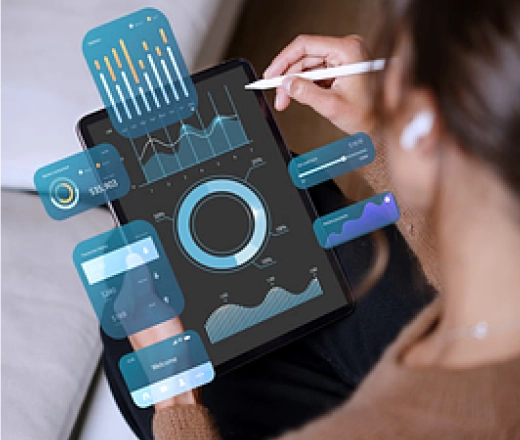
Webvillee’s IoT platform supports multiple equipment brands and data protocols for both legacy and modern machines. Generate insights from a few devices or hundreds.
Collect data from devices and controllers
Connect with PLC and SCADA systems, sensors, and gateways. Support for MODBUS, OPC/UA, RTU, MT Connect, Profibus, Profinet, Ethernet IP, and custom connectors for any third-party systems.
Collect a range of data types
Track custom sensor values, equipment status, operating modes, alerts, overrides, load data, speeds, temperatures, rotations, PMC parameters, diagnostics, and more.
Experience high-frequency data collection
Capture real-time data at high frequency (1 KHz) from specific CNC controls for immediate analysis and machine learning applications.
Configure and manage sensors
Enhance systems by adding external sensors or connecting older equipment through digital and analog interfaces. Configure and manage sensors remotely via web interface.
Connect
Edge computing
Use edge computing for local processing and data filtering. Optimize data transferred for analysis, diagnose issues, and deploy updates remotely without site visits.Webvillee’s IoT platform supports multiple equipment brands and data protocols for both legacy and modern machines. Generate insights from a few devices or hundreds.
Secure data aggregation
Collect data from multiple sources into secure, scalable infrastructure. Regular security updates and user-friendly data management tools protect manufacturing information.
Telemetry and reporting
Synchronize different equipment data for consistent reporting and AI-based analytics. Evaluate custom sensor values, equipment status, alerts, loads, speeds, and more.
Remote management
Eliminate unnecessary site visits. Manage and control equipment remotely through edge computing. Implement changes from any location with a few clicks.
Secure cloud integration and storage
Stream and store data securely from edge to cloud infrastructure using HTTPS and MQTT protocols. Enable fast and scalable data access.
Customize
Integrate with other applications and APIs
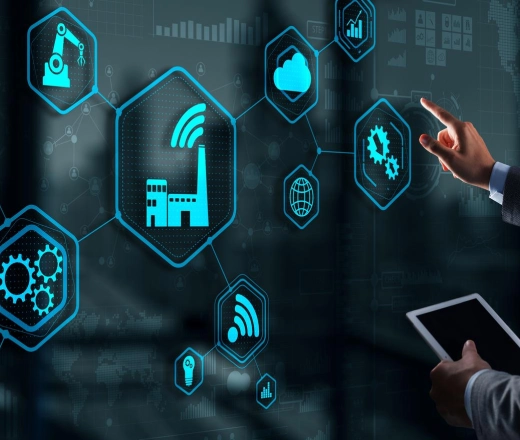
Connect equipment data with your digital operations. REST APIs enable integration with CRM, ERP, BI tools, and other business applications.
Create workflows
Build rule-based workflows for production data. Set equipment conditions and performance metrics to trigger manual actions or automated system responses.
Real-time insights
Provide service managers and technicians with equipment health status through real-time and historical monitoring. Enable preventative maintenance with color-coded anomaly notifications.
Integrate AI with analytics
Use performance reports to identify constraints and assess OEE, equipment utilization, and downtime patterns. Gain visibility and actionable insights across production lines.
Build your own IoT solutions
Develop custom applications with tailored interfaces. Integrate with third-party applications for quality control, inventory management, role customization, and various use cases.
Solution Modules Available:
- Equipment Monitoring
- Production Line tracking
- Overall Equipment Effectiveness
- Shift and Job Management
- Maintenance and SLA tracking
- Quality Analysis
- Asset and Inventory
- Management
- Energy and Sustainability
- Utilities Monitoring
- Safety and Control
Single platform for complete production automation
Complete visibility of critical assets
Track equipment (CNC, robotic systems, precision machinery, etc.) in real time to maximize efficiency.
Condition monitoring
Monitor real-time equipment health and performance data.
Machine performance
Analyze speed, output, energy use, and health indicators for performance optimization.
Machine uptime and downtime
Track when equipment operates and when it stops to minimize disruptions
Machine utilization
Compare actual operation time against scheduled hours to optimize production.
Asset operations
Monitor real-time asset performance across facilities.
Usage patterns
Analyze equipment usage for optimized shift planning and performance.
Minimize interruptions for production efficiency
Monitor operations proactively for improved productivity and quality control.
Line stoppages
Understand causes, duration, and frequency of production interruptions.
Cycle time
Analyze task completion time to identify constraints and optimize workflows.
Planned vs actual yield
Compare projected and actual output to assess planning effectiveness and improve efficiency.
Reject rate
Track percentage of products failing quality standards and implement corrective actions.
Production downtime
Understand reasons for interruptions, their duration, and impact on efficiency.
Operator efficiency
View operator activities, performance metrics, and task completion to improve productivity.
Measure OEE for improved productivity
Evaluate availability, performance efficiency, and quality yield.
Equipment effectiveness
Calculate availability, performance, and quality of production equipment.
Production bottlenecks
Identify process constraints and slowdowns.
Benchmarking
Compare equipment OEE with established standards to identify improvements and set performance targets.
Asset performance
View real-time data on equipment health, condition, and usage.
Productivity
Optimize workflows and energy efficiency by assessing operations and output.
Availability
Track operational equipment to plan scheduled maintenance and avoid unplanned downtime.
Manage shifts, jobs, and resources
Real-time shift data
Monitor, analyze, and report operational data during work shifts.
Resource allocation
Optimize distribution of personnel, machinery, and materials.
Job cards
Digital records with detailed task, job, or work order information to improve visibility and streamline operations.
Time and attendance management
Track employee work hours and attendance to improve productivity and ensure compliance.
Idle time vs productive time
Analyze equipment idle and productive time to enable timely interventions and predictive maintenance.
Workforce efficiency
Gain insights to improve overall productivity and enable collaboration.
Monitor conditions, predict maintenance, and manage work orders
Automate tasks and reduce maintenance costs with IoT. Detect early downtime signs and schedule maintenance proactively.
Remote asset condition monitoring
Analyze real-time equipment health and performance data from any location.
Predictive maintenance
Prevent equipment failures proactively and extend asset lifespan.
Mobile work orders
Access work instructions, asset information, and task assignments digitally.
Scheduled and planned maintenance
Schedule maintenance based on equipment health to improve reliability, efficiency, and cost-effectiveness.
Maintenance history
Document maintenance activities to optimize production.
Asset repository
Access comprehensive asset views to make data-driven decisions and optimize maintenance strategies.
Achieve standards with precision
Establish quality benchmarks and implement safety measures while ensuring regulatory compliance with ISO standards, FDA regulations, and ITAR
Equipment health
Monitor real-time equipment condition and performance.
Production yield
Measure quantity and quality of process output relative to input.
Traceability
Track and record product production history to identify and address quality issues.
Compliance with regulations and standards
Build trust and minimize legal and regulatory risks.
Material composition
Monitor material composition accurately to ensure quality standards.
Defect analysis
Analyze production abnormalities to reduce waste and improve operational efficiency.
Track assets and inventory from source to facility
Asset identification
Gain visibility of assets and perform maintenance as needed.
Location tracking
Track asset locations with GPS, BLE, RFID, and more to improve logistics and enhance safety.
Availability
Monitor stock availability to reduce stockouts or overstocking, enhance order fulfillment, and improve supply chain efficiency.
Maintenance and service history
Document all maintenance and service activities to optimize production and resource allocation.
Utilization analysis
Optimize usage and management of inventory for accurate order fulfillment and reduced holding costs
Geo-fencing
Create virtual boundaries and trigger specific actions when assets, equipment, or personnel enter or exit predefined areas.
Reduce energy consumption and carbon emissions
Energy consumption pattern
Take a data-driven approach to improving energy efficiency, reducing operational costs, and achieving sustainability goals.
Carbon emissions
Measure, track, and manage carbon dioxide and greenhouse gas releases.
Waste generation
Access real-time insights into industrial waste volume and types to reduce environmental impact.
Renewable energy integration
Integrate renewable energy sources with existing infrastructure.
Environmental conditions
Measure site air quality, noise, temperature, and more.
Measurement and verification
Measure and verify process performance and efficiency to validate energy savings, improvements, and other KPIs.
Reduce costs with smart utilities management
Power quality
Track voltage stability, frequency, and harmonic distortion to maintain efficiency and prevent interruptions.
Water usage
Monitor water consumption throughout facilities.
Gas flow and pressure
Measure gas flow rates and pressure levels throughout facilities.
Leak detection
Detect water leaks or anomalies to prevent water waste and minimize environmental impact.
Demand planning
Monitor real-time energy consumption patterns and fluctuations.
Fault management
Monitor, detect, and correct anomalies proactively.
Maintain safe manufacturing operations
Monitor fire safety equipment continuously (fire extinguishers, alarm systems, sprinkler systems).
Sprinkler system status
Monitor sprinkler system status to ensure proper functioning and readiness.
Emergency sirens and lighting
Detect emergencies and enable sirens and lighting changes to notify personnel.
Temperature monitoring
Monitor temperature anomalies.
Extinguisher status
Monitor sprinkler system status to ensure proper functioning and readiness.
Smoke sensor detection
Detect smoke and notify personnel of abnormalities.
Remote monitoring
Monitor abnormalities from any location.
Transform Operations With Real-Time Data
Make your equipment and processes efficient with real-time insights
Drive Efficiency And Improve Predictability
Deliver visibility on equipment, facility, and building energy consumption, health and usage parameters, equipment status, production line performance, maintenance, and analytical insights.
Seamless Connectivity
Connect with any devices, sensors, machines, and communication protocols regardless of brand for seamless production.
Workflows
Automate production by configuring triggers and actions based on equipment or operator data: anomaly detection, equipment inactivity, KPIs, line stoppages, etc.
Smart alerts and notifications
Production target shortfalls, unusual rejection occurrences, equipment downtime or breakdown, operator task allocation, setup configuration changes, etc.
Data security and privacy
Keep IoT data and devices secure with built-in device authentication and authorization.
Data acquisition
Collect large scale real-time data from legacy to modern machines.
Intuitive data visualization
Create custom dashboards and interfaces with pre-built widgets: total output, equipment availability, production time, vibration monitoring, temperature, etc
Analytics and reporting
Track and analyze equipment data: performance, availability, and quality to assess production floor OEE.
Data modeling
Define how equipment data, performance metrics, and conditions process and trigger sequence actions
Business app integrations
Connect factory systems like ERP, billing, helpdesk, or any application to improve inventory management, job scheduling, etc.
Mobile app
Develop custom mobile applications to gain competitive advantage through data-driven metrics and maximize equipment value.
Reduce
- Downtime
- Energy consumption
- Maintenance and replacement costs
Increase
- Asset lifecycle
- Equipment efficiency
- Revenue
Improve
- Operator retention
- Equipment performance
- Product quality
Optimize
- Equipment utilization
- Maintenance cycles
- Production output
Transform
- Your business
- Manufacturing operations
- Workforce efficiency
Transform your manufacturing operation
Transform your manufacturing operation

Increase
- Asset lifecycle
- Equipment efficiency
- Revenue
Improve
- Operator retention
- Equipment performance
- Product quality

Optimize
- Equipment utilization
- Maintenance cycles
- Production output

Transform
- Your business
- Manufacturing operations
- Workforce efficiency
Reduce
- Downtime
- Energy consumption
- Maintenance and replacement costs
Frequently Asked Questions
What is the role of IIoT in manufacturing processes?
How is IoT impacting the manufacturing industry?
Which manufacturing challenges does IIoT address?
What is the difference between IoT and IIoT?
Is Webvillee IIoT a platform or a solution?
It is a platform that serves as the foundation for implementing and customizing solutions to challenges industrial organizations face during digital transformation.
Can Webvillee IIoT be retrofitted to existing infrastructure?
Yes, Webvillee IoT integrates easily with existing infrastructure.
How can I implement Webvillee IIoT in my manufacturing facility?
Contact our technical experts. They evaluate your facility’s current infrastructure, existing equipment, sensors, and communication systems. This helps us determine how our solution supports your organization’s specific goals.
How can I become a Webvillee IoT solution partner?
Click the Partner Inquiry button and complete the form. Our team will contact you soon
Who can become a Webvillee IoT partner?
Anyone who wants to support IoT journeys as a system integrator, reseller, hardware partner, implementation partner, MSP, or solution provider.
Can I customize the Webvillee IoT solution to customer requirements?
Yes, Webvillee IoT is fully customizable and can integrate with any hardware or third-party application.