

The Real Value Behind Modern SAP Services and Why Enterprises Rely on Them
Enterprise SAP value lies in its ability to bring structure, visibility, and control to complex business environments. Modern SAP services help enterprises manage scale, reduce operational friction, and make confident decisions across finance, supply chain, and operations.
Why SAP Continues to Power the World’s Largest Enterprises
SAP remains central to enterprises because it handles complexity that most systems cannot.
Large organizations operate across regions, regulations, currencies, and business units. SAP provides a consistent backbone that supports these realities without fragmenting processes or data.
Enterprises rely on SAP not because it is familiar, but because it continues to evolve with modern business demands.

What Enterprises Actually Expect From Modern SAP Services
Enterprises expect outcomes, not just system stability.
Modern SAP services are no longer measured only by uptime or transaction processing. They are evaluated by how well they support agility, insight, and growth.
- Real time visibility across the organization
- Standardized processes with room for flexibility
- Systems that scale without disruption
Why Legacy Thinking About SAP No Longer Applies
Old perceptions of SAP as rigid and slow are outdated.
Earlier SAP implementations focused heavily on control and standardization. While necessary, they often limited responsiveness.
Today’s SAP landscape emphasizes adaptability, integration, and business driven configuration.
Understanding Modern SAP Services in Today’s Enterprise Context
Modern SAP services align technology with business priorities.
They focus on enabling operations rather than enforcing rigid workflows.
How SAP Has Evolved Beyond Traditional ERP
SAP now supports end to end enterprise processes.
Beyond core ERP, SAP covers analytics, experience management, and intelligent automation.
The Role of Cloud, Analytics, and Integration in SAP
Cloud and analytics redefine how enterprises use SAP.
Cloud based deployments improve scalability, while embedded analytics support faster decisions.
Why SAP Is Now a Platform, Not Just a System
SAP connects core operations with innovation layers.
This platform approach allows enterprises to modernize without replacing mission critical systems.
The Real Business Value Enterprises Get From SAP
Enterprise SAP value comes from clarity and consistency.
SAP enables organizations to operate with confidence across complex environments.
Creating a Single Source of Truth Across the Organization
Unified data eliminates conflicting reports.
Finance, operations, and leadership work from the same information.
Standardizing Processes Without Losing Flexibility
Standardization supports scale without rigidity.
Enterprises maintain consistency while adapting processes locally.
Supporting Complex Business Models at Scale
SAP handles multi entity, multi currency operations.
This capability is critical for global enterprises.
How SAP Services Improve Operational Efficiency
Efficiency improves when processes run end to end.
Modern SAP services focus on automation and integration.
Automating Core Business Processes End to End
Automation reduces delays and manual effort.
Workflows move smoothly from procurement to payment.
Reducing Manual Errors and Process Delays
System driven validation improves accuracy.
Error rates decrease as manual handoffs disappear.
Improving Visibility Across Finance, Supply Chain, and Operations
Leaders see performance as it happens.
This visibility supports proactive management.
Enabling Smarter Decision Making With SAP Insights
Insights drive better enterprise decisions.
SAP embeds analytics directly into workflows.
Real Time Reporting and Embedded Analytics
Reports reflect current business conditions.
Decisions rely on live data.
Role Based Dashboards for Leadership and Teams
Each role sees relevant metrics.
This focus improves execution.
Turning Enterprise Data Into Actionable Intelligence
Analytics translate data into action.
Enterprises move from insight to execution faster.
SAP as a Foundation for Digital Transformation
Enterprise SAP value increases when aligned with transformation goals.
SAP supports modernization without destabilizing operations.
Supporting Cloud Migration and System Modernization
SAP integrates with modern cloud environments.
This aligns with broader Cloud Solution initiatives.
Integrating SAP With Non SAP Applications
Integration connects the enterprise ecosystem.
SAP works alongside CRM & ERP platforms and third party tools.
Enabling Innovation Without Disrupting Core Systems
Innovation layers build on stable foundations.
This approach reduces risk.
Scalability and Reliability at Enterprise Scale
SAP supports growth without compromising stability.
Enterprises depend on consistent performance.
Handling High Transaction Volumes Consistently
Performance remains reliable under load.
This consistency protects operations.
Supporting Global Operations and Compliance
Regional requirements remain manageable.
SAP adapts to regulatory complexity.
Ensuring Business Continuity and System Resilience
Resilience reduces operational risk.
Enterprises maintain uptime.
Security, Governance, and Compliance With SAP
Governance protects enterprise integrity.
SAP embeds controls into core processes.
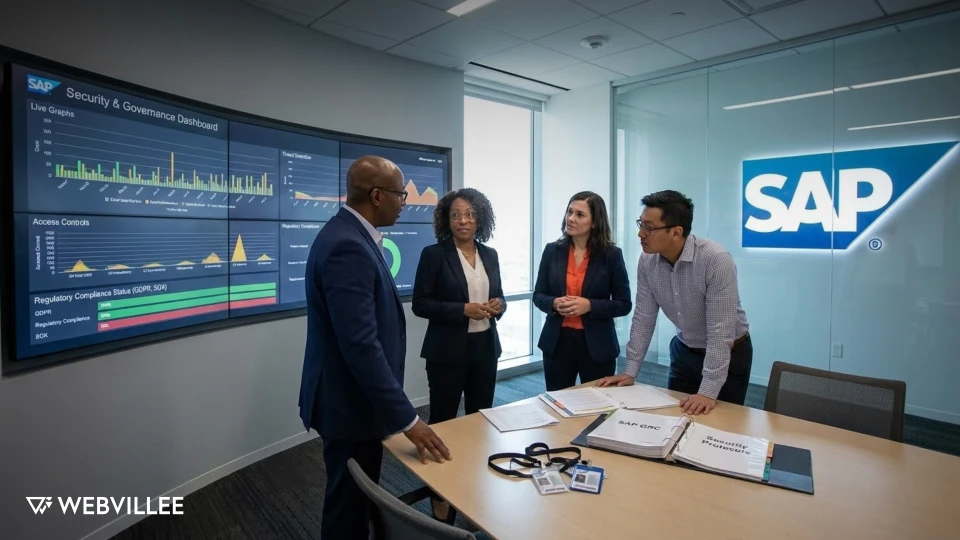
Built In Controls for Data Protection
Access and data policies remain enforced.
This reduces exposure.
Meeting Industry and Regional Compliance Requirements
Compliance aligns with regulations.
Audit preparation becomes simpler.
Reducing Risk Through Centralized Governance
Governance supports accountability.
Risk management improves.
Common Challenges Enterprises Face With SAP and How Services Solve Them
Challenges arise without the right service approach.
Complex Implementations Without Clear Strategy
Strategy guides configuration.
Modern services align SAP with business goals.
User Adoption and Change Management Issues
Adoption drives return on investment.
Training and communication matter.
Underutilized Capabilities Across SAP Modules
Many features remain unused.
Optimization unlocks value.
What Modern SAP Services Actually Include
Services extend value beyond implementation.
Implementation, Migration, and Upgrade Services
Projects follow structured delivery.
Risk stays controlled.
Ongoing Support and Application Management
Stability improves with continuous support.
This aligns with Managed IT Services.
Optimization, Customization, and Performance Tuning
Systems improve over time.
Performance aligns with growth.
What Enterprises Should Look for in a SAP Services Partner
The right partner focuses on long term value.
Delivery goes beyond project completion.
Deep Functional and Industry Expertise
Experience reduces implementation risk.
Industry knowledge matters.
Strong Governance and Delivery Frameworks
Structure ensures consistency.
Projects stay predictable.
Long Term Value Creation, Not Just Project Delivery
Partnership supports growth.
This approach aligns with SAP Services, Digital Transformation, and Product Engineering.
Why SAP Remains a Strategic Enterprise Investment
Enterprise SAP value lies in control, clarity, and scale.
Modern SAP services help enterprises manage complexity without slowing growth.
When implemented and supported correctly, SAP transforms operational complexity into structured, data driven control that supports long term business success.