

How Managed IT Services Create Stress Free, High Performance Business Operations
Managed IT services for business operations help organizations reduce daily IT stress, stabilize systems, and shift from reactive problem solving to predictable, high performance execution.
Why IT Stress Is a Business Problem, Not Just a Technical One
IT stress affects productivity, decision making, and business confidence.
When systems are unstable or unpredictable, teams slow down even if the issues seem technical. Missed deadlines, delayed decisions, and frustrated employees are often symptoms of deeper IT stress.
For leadership teams, unreliable IT becomes a constant background risk that distracts from growth and strategic priorities.

What Stress Free Operations Really Mean for Leadership Teams
Stress free operations mean predictability, visibility, and control.
Leaders do not expect zero issues. They expect issues to be anticipated, managed, and resolved without constant escalation.
- Systems work consistently
- Problems are addressed before users complain
- IT supports business plans instead of blocking them
How IT Issues Quietly Disrupt Daily Business Performance
Small IT problems create large operational inefficiencies.
Slow applications, intermittent outages, and security concerns interrupt workflows even when they do not trigger formal incidents.
Over time, teams build workarounds instead of relying on systems, which lowers performance and increases risk.
The Hidden Sources of IT Stress Inside Organizations
Most IT stress comes from issues that accumulate silently.
These problems often remain unmanaged until they reach a breaking point.
Unplanned Downtime and Emergency Fixes
Unexpected outages disrupt work and damage trust.
Emergency fixes consume time, pull teams away from priorities, and rarely address root causes.
Overloaded Internal IT Teams
Internal teams are stretched between support and strategy.
When the same people handle tickets, maintenance, security, and planning, burnout and delays are inevitable.
Lack of Visibility Into Systems and Risks
You cannot manage what you cannot see.
Without centralized monitoring, issues surface only after they impact users.
Reactive Decisions Instead of Proactive Planning
Firefighting replaces long term planning.
IT becomes focused on survival instead of improvement.
What Managed IT Services Actually Include
Managed IT services provide ongoing, proactive IT management.
They are designed to keep systems stable, secure, and optimized on a daily basis.
Day to Day Infrastructure Monitoring and Support
Systems are monitored continuously.
Performance issues are identified and addressed before users are affected.
Security Management and Threat Prevention
Security is monitored as an ongoing process.
Threat detection, response, and prevention reduce exposure without overwhelming internal teams.
Patch Management and System Updates
Updates are applied consistently and safely.
This reduces vulnerabilities and compatibility issues.
Backup, Recovery, and Business Continuity
Data protection is built into daily operations.
Recovery processes are tested and ready when needed.
How Managed IT Services Remove Operational Pressure
Operational pressure decreases when IT becomes predictable.
Managed services replace uncertainty with structured processes.
24 by 7 Monitoring That Prevents Issues Before They Escalate
Problems are detected early.
Many incidents are resolved before teams even notice them.
Faster Issue Resolution Without Internal Escalations
Clear escalation paths reduce delays.
Issues are handled by specialists without pulling internal teams into crisis mode.
Clear Processes for Incident and Change Management
Structured workflows reduce confusion.
Changes are planned, documented, and communicated.
Building High Performance Operations Through Proactive IT
High performance depends on stable and reliable systems.
Managed IT services focus on prevention rather than reaction.
Stabilizing Core Systems That Teams Rely On
Critical systems remain available and responsive.
This consistency supports daily execution.
Improving System Reliability and Uptime
Reliability builds trust across the organization.
Teams rely on systems instead of working around them.
Standardizing IT Processes Across the Business
Consistency reduces risk and inefficiency.
Standard processes replace ad hoc solutions.
Freeing Internal Teams to Focus on Strategic Work
Internal IT teams perform best when they are not overloaded.
Managed services take care of operational work.
Reducing Context Switching and Firefighting
Fewer interruptions improve productivity.
Teams can concentrate on planned initiatives.
Allowing IT Leaders to Plan Instead of React
Leadership shifts from crisis management to strategy.
This enables roadmap driven improvement.
Better Alignment Between IT and Business Goals
IT decisions support business priorities.
This alignment improves outcomes.
How Managed IT Services Improve Security Without Complexity
Security becomes structured instead of reactive.
Managed services integrate security into everyday operations.
Continuous Security Monitoring and Alerts
Threats are identified early.
Response is faster and more consistent.
Structured Vulnerability Management
Risks are tracked and addressed methodically.
This reduces exposure over time.
Reducing Human Error Through Automation and Controls
Automation improves consistency.
Manual mistakes become less frequent.
Predictable Costs and Better IT Budget Control
Managed IT services replace surprises with predictability.
Costs align with defined service levels.
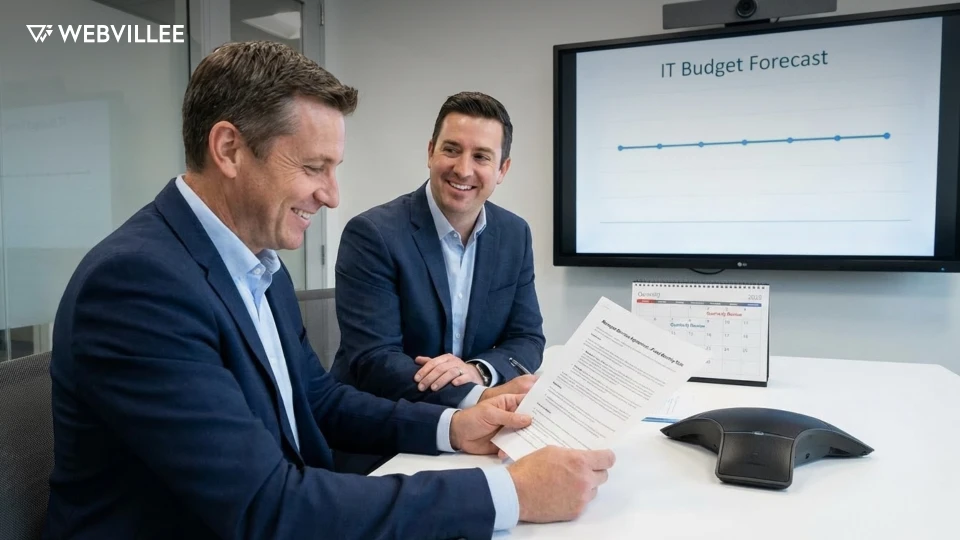
Moving From Unplanned Expenses to Fixed Monthly Costs
Budgeting becomes simpler.
Unexpected repair costs are reduced.
Clear Service Level Expectations and Accountability
Responsibilities are clearly defined.
Performance is measurable.
Improved Forecasting and Cost Transparency
IT spending supports planning.
Leadership gains confidence in forecasts.
Supporting Business Growth Without Adding IT Burden
Growth should not increase operational stress.
Managed services scale alongside the business.
Scaling Users, Systems, and Locations Smoothly
Expansion happens without disruption.
New users and sites are supported consistently.
Supporting New Applications and Workloads Easily
New systems integrate into existing environments.
This supports platforms like CRM & ERP, Salesforce Services, SAP Services, Microsoft Dynamics 365, and ServiceNow.
Ensuring IT Stability During Periods of Change
Change does not destabilize operations.
Transitions are planned and supported.
What a Good Managed IT Partner Looks Like
The right partner focuses on business outcomes.
Technology decisions are guided by impact, not tools.
Clear Communication and Defined Responsibilities
Expectations are documented and shared.
This reduces friction.
Business First Approach to IT Decisions
Technology supports strategy.
This aligns with broader Digital Transformation and Product Engineering initiatives.
Proactive Reporting and Continuous Improvement
Performance is reviewed and improved regularly.
IT evolves with the business.
Common Misunderstandings About Managed IT Services
Misconceptions prevent businesses from exploring the model.
- It is not about losing control of IT
- It is not only for large enterprises
- It is not a one size fits all solution
How to Decide If Managed IT Services Are Right for You
Decision clarity comes from assessing current pain points.
Managed services work best when aligned with real needs.
Signs Your Current IT Model Is Under Pressure
Frequent incidents and slow response are key indicators.
Internal teams may already be overwhelmed.
Questions to Ask Before Engaging a Provider
Clarity upfront prevents issues later.
Scope, accountability, and communication matter.
How to Transition Without Disrupting Operations
A phased transition reduces risk.
Knowledge transfer and documentation ensure continuity.
Stress Free IT as a Competitive Advantage
Reliable IT creates confident teams and better outcomes.
When IT stress is removed, businesses move faster and execute better.
With the right Managed IT Services supported by strong Cloud Solution foundations, organizations turn IT from a daily burden into a long term competitive advantage.